Raboyseyee and Ladies,
Let’s begin with a mazel tov shout out to our friends, Batsheva and Shaul Katz and their entire extended family, upon the wedding just last week -with the heylige Ois and eishes chayil in attendance- of their son Yoni to Tammy Zeigler, she the beautiful daughter of Galina and Amichai Ziegler, they of Brooklyn, New York. So happens that the Ois knows Batsheva’s parents for at least 65 years -mazel tov as well to Livia and Chaim Jacobs- and remembers well her grandparents, OBM. And what a wedding it was! May Tammy and Yoni merit to build a beautiful life together.
The Original Cloud Network:
The heylige Ois is en route to Los Angeles, where he and the eishes chayil will spend the next week vising with our children and granddaughter, Miriam Reizel. Looking out the window as I do from time to time -though admittedly, I am kimat almost always seated in the aisle- I couldn’t help but notice the beautiful clouds that seemed to be suspended mamish in the middle of the sky. How clouds work, ver veyst, but they are mesmerizing.
Clouds are on my mind this week because, aside from watching a few laugh-out-loud episodes of Friends, Curb and then some FOX, I took some time to re-read Parshas Bihaloischo in search of a new topic for this -my 16th time around the parsha. And there, featured mamish prominently were the clouds. The ones in the parsha are referred to as the Ananay Hakovod (The Clouds of Glory), and how they operated was seemingly miraculous.

For most of human history, clouds were simply clouds. White puffs drifting lazily across the heavens. Miraculous enough. Then, not too many years ago, suddenly “the Cloud” became all-powerful. Today the cloud is no longer just weather. It is an invisible all-powerful digital empire silently storing our memories, businesses, bank accounts, conversations, directions, and daily lives somewhere beyond our reach. Most people don’t really understand how the Cloud works, where it actually is, or who controls it, yet they trust it with everything. It stores our photographs, our bank records, our businesses, and perhaps a bit frighteningly, our entire lives. The Cloud tells us where to drive, what to buy, whom to call, and occasionally what to think. Major corporations collapse when the Cloud goes down for six minutes. Modern civilization now exists suspended somewhere above our heads in invisible digital vapor. How it works, ver veyst? Few of us mortals chap how the cloud works; what we know is that it’s there and our modern day lives depend on it.

Ober, is the cloud and its power over us something mamish new? Not for us Yiddin! As it turns out, we were already living entirely dependent on “the Cloud” more than three thousand years ago. We were first introduced to clouds back in Parshas Beshalach (13:21) just before Matan Toirah where we read this:
וַֽיהֹוָ֡ה הֹלֵךְ֩ לִפְנֵיהֶ֨ם יוֹמָ֜ם בְּעַמּ֤וּד עָנָן֙ לַנְחֹתָ֣ם הַדֶּ֔רֶךְ וְלַ֛יְלָה בְּעַמּ֥וּד אֵ֖שׁ לְהָאִ֣יר לָהֶ֑ם לָלֶ֖כֶת יוֹמָ֥ם וָלָֽיְלָה׃
“And Hashem went before them by day in a pillar of cloud to guide them on the way, and by night in a pillar of fire to illuminate for them, so they could travel day and night.” That posik was really the birth of the entire Cloud system.
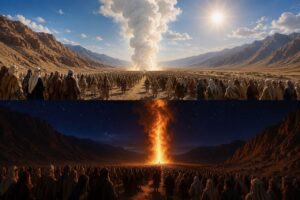
Our parsha -which takes place about a year after Revelation describes perhaps the first cloud-based civilization in history. The Ananay HaKavod described in our parsha were much more than decorative miracles floating romantically over the Mishkan. They were the operating system of the Jewish people. The Cloud determined when the nation traveled and when it stopped. It dictated movement, timing, direction, and national destiny. When the Cloud lifted, millions packed. When it rested, millions unpacked. No committees were formed. No travel agents consulted. No questions asked. The heylige Toirah tells us that the entire Jewish nation lived and moved based on instructions from the Cloud. And it was free! Unlike regular clouds that float lazily without direction, the Midbar Cloud actually knew where it was going. Gishmak!
What happened next? Once clouds were empowered, our sages of the heylige medrish brough their own imagination to bare and decided that the magic of the clouds extended much further. The Clouds did not merely hover overhead. Indeed, our very creative exegetes (Sifrei Bamidbar also brought by Rashi in Devorim, Medrish Tanchuma & Bamidbar Rabbah) describe not just clouds hovering above the Yiddin and leading the way, but a complete system consisting of seven holy clouds and a very specific breakdown of each clouds location and responsibility. Let’s read veyter.
- Four clouds on the four sides
- One cloud above them
- One cloud below them
- One cloud traveling ahead of them
The cloud ahead flattened mountains, filled valleys, killed snakes/scorpions, and cleared the path. The clouds around protected from enemies, shielded from arrows/projectiles and enclosed the nation. The cloud below cushioned the ground, protected their feet, and the cloud above acted as climate control from heat/sun. Mamish an entire cloud network. The Yiddin in the Midbar were not merely using the Cloud, they were living inside a fully integrated Cloud environment. It taka all sounds and reads very contemporary -even scifi-ish- but it’s surprisingly accurate to the Midrashim.
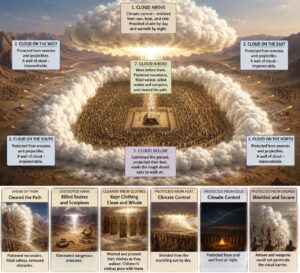
It appears that the clouds worked as a suspension system, defensive shield, GPS, HVAC, road construction, and anti-missile defense …all rolled into one Divine ecosystem. Maybe the forerunner of today’s drones? They surrounded the Yiddin entirely — above them, below them, and on every side. One flattened mountains and raised valleys before the nation traveled, functioning as the world’s first Divine highway department. Another destroyed snakes and scorpions lurking in the desert, and read this: Another cleaned and pressed their clothing as they walked. According to another medrish, the garments of children even grew together with them, eliminating the need for replacements. Imagine an entire nation wandering for forty years without luggage, dry cleaners, or desperate mothers shopping for larger shoes before Yom Tov. The medrish almost describes a luxury civilization disguised as a refugee camp. The Clouds also functioned as climate control. They shielded the Yiddin from desert heat by day and cold by night. Dust storms could not penetrate. Enemies struggled to attack. The harshest environment on earth became inhabitable because Heaven itself reshaped reality around the chosen people. Wait! There’s more: Food descended from above. Water traveled beside them. Roads flattened automatically. Clothing repaired itself. Dangerous animals vanished before arrival. The Cloud dictated movement while simultaneously providing navigation, sanitation, weather control, security, and perhaps the world’s first wireless garment care system. In modern language, the Jews were living inside history’s first fully managed environment.
And yet, mamish a few pisukim later, in fact, the very next posik after reading “And the Cloud of Hashem was upon them by day when they traveled…” what do we read? That the Yiddin began to complain. What? Midbar magic all around them and they shot off a litany of complaints to the point where poor Moishe nearly had a breakdown and asked to be dead!? It’s mamish incomprehensible. How could the Yiddin complain about everything under the sun…err… I meant under the cloud? It’s mamish astonishing and chutzpadik. Did the Ois just write that Moishe became so despondent and angry that he wanted out? Does the heylige Toirah tell us that? Indeed it does. Mamish just after the Yiddin voiced their complaints we read this (Bamidbar 11:15):
וְאִם־כָּכָה֙ אַתְּ־עֹ֣שֶׂה לִּ֔י הָרְגֵ֥נִי נָ֖א הָרֹ֑ג אִם־מָצָ֤אתִי חֵן֙ בְּעֵינֶ֔יךָ וְאַל־אֶרְאֶ֖ה בְּרָעָתִֽי׃
“And if this is how You deal with me, please kill me now if I have found favor in Your eyes, and let me not see my suffering.”
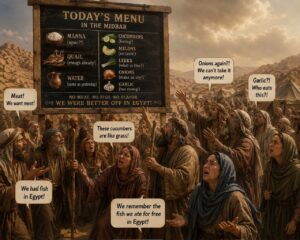
The same Yiddin who witnessed Revelation, heard the Aseres Hadibros, experienced the eygel crisis, built the Mishkan, lived beneath the Clouds, and ate munn daily, collapsed into complaints, cravings, nostalgia for Egypt, and an emotional rebellion?! Say it’s not so but it was just so! Oy vey! The truly astonishing thing about the complaints in the parsha is not that they happened — but how quickly they happened. Less than a year earlier, these same Yiddin stood at Har Sinai hearing the voice of the RBSO Himself. The mountain roared and burned. The heavens opened. History changed forever. And now? We read 10 pisukim wherein they complain about the menu. What’s taka pshat? The bottom lines: it appears that Sinai lasted for momenta; human nature lasted longer. Revelation changed history permanently. It did not change people permanently. As it turns out, even living inside visible miracles did not eliminate anxiety, craving, insecurity, or complaints. We are a tough bunch! But that’s nothing when compared to what Rashi has to say and how he interprets their complaints; it’s shreklich. Let’s read a few pisukim from the text. Says the heylige Toirah (Bamidbar 11:4-10), azoy:
| 4 But the multitude among them began to have strong cravings. Then even the children of Israel once again began to cry, and they said, “Who will feed us meat? | דוְהָאסַפְסֻף אֲשֶׁר בְּקִרְבּוֹ הִתְאַוּוּ תַּאֲוָה וַיָּשֻׁבוּ וַיִּבְכּוּ גַּם בְּנֵי יִשְׂרָאֵל וַיֹּאמְרוּ מִי יַאֲכִלֵנוּ בָּשָׂר: | |
| 5 We remember the fish that we ate in Egypt free of charge, the cucumbers, the watermelons, the leeks, the onions, and the garlic. | הזָכַרְנוּ אֶת הַדָּגָה אֲשֶׁר נֹאכַל בְּמִצְרַיִם חִנָּם אֵת הַקִּשֻּׁאִים וְאֵת הָאֲבַטִּחִים וְאֶת הֶחָצִיר וְאֶת הַבְּצָלִים וְאֶת הַשּׁוּמִים: | |
| 6 But now, our bodies are dried out, for there is nothing at all; we have nothing but manna to look at.” | ווְעַתָּה נַפְשֵׁנוּ יְבֵשָׁה אֵין כֹּל בִּלְתִּי אֶל הַמָּן עֵינֵינוּ: | |
| 7 Now the manna was like coriander seed, and its appearance was like the appearance of crystal. | זוְהַמָּן כִּזְרַע גַּד הוּא וְעֵינוֹ כְּעֵין הַבְּדֹלַח: | |
| 8 The people walked about and gathered it. Then they ground it in a mill or crushed it in a mortar, cooked it in a pot and made it into cakes. It had a taste like the taste of oil cake. | חשָׁטוּ הָעָם וְלָקְטוּ וְטָחֲנוּ בָרֵחַיִם אוֹ דָכוּ בַּמְּדֹכָה וּבִשְּׁלוּ בַּפָּרוּר וְעָשׂוּ אֹתוֹ עֻגוֹת וְהָיָה טַעְמוֹ כְּטַעַם לְשַׁד הַשָּׁמֶן: | |
| 9 When the dew descended on the camp at night, the manna would descend upon it. | טוּבְרֶדֶת הַטַּל עַל הַמַּחֲנֶה לָיְלָה יֵרֵד הַמָּן עָלָיו: | |
| 10 Moses heard the people weeping with their families, each one at the entrance to his tent. The Lord became very angry, and Moses considered it evil. | יוַיִּשְׁמַע משֶׁה אֶת הָעָם בֹּכֶה לְמִשְׁפְּחֹתָיו אִישׁ לְפֶתַח אָהֳלוֹ וַיִּחַר אַף יְהֹוָ מְאֹד וּבְעֵינֵי משֶׁה רָע: |
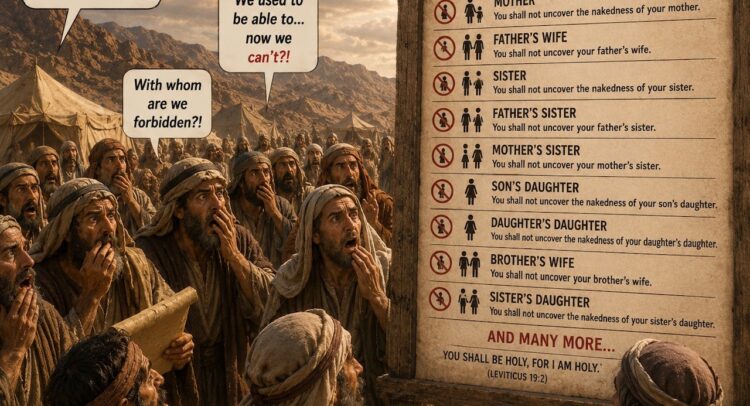
OMG, and let’s re-read posik 10 and specifically the words ‘boichem limishpichoisof’ (crying for their families). Says Rashi that things were even worse: “they were longing for the sex now forbidden with family members.” Rashi says what? Mistama you think the Ois cannot be correct but you’d be wrong, and let’s quote Rashi verbatim who says this: בוכה למשפחותיו —על עסקי משפחות, על עריות הנאסרות להם. “Crying regarding family matters — over the forbidden sexual relationships that had now become prohibited to them.”
Rashi, quotes the medrish who radically reframed the entire episode. Though the Yiddin appear to be complaining about meat and vegetables, Chazal insisted that the deeper issue was forbidden relationships newly prohibited after Matan Toirah. Once Rashi reveals that layer, one begins to wonder whether the entire culinary conversation was but a euphemistic surface expression for desires far more primal. Let’s look at that again. Rashi, quoting our sages, says azoy: what they were crying about was taka family related. What was bothering them was that many familiar sexual relationships were now (following Matan Toirah) verboten. No longer could one have sexual relations with the sister-in-law, or with assorted other close relatives notwithstanding how hot they were, or how attracted one was. See parshas Achrei Mois for a full list of the forbidden. Seemingly, such relationships -some of them- were kosher and mistama normative behavior prior to the acceptance of the heylige Toirah, but now, fartig; over and done! The misoininim (complainers) missed that. After all, many taka do have a hot sister-in-law or tanta. The medrish will add some color and tell us more, much more. When the Yiddin were asking (in posik 4) “who will feed us meat,” it wasn’t a good rib steak or even a succulent sizzling smash burger they were hungry for. Instead, the meat they desired to chew on, was with a hot mishpocho member. And when they cried out for onions, in posik 5, it wasn’t because they were peeling onions and their eyes were burning. Instead, says the medrish, their cries for onions too, was a euphemism for forbidden sex. Oy vey! One can only imagine what they were longing for when they mentioned cucumbers, leeks, melons and garlic (see posik 5 above). Nu, efsher we can kler that only a few rogue yeshiva rebbes were asking for cucumbers, if you chap. Veyter. The bottom line (according to the medrish) was this: they wanted sex and not just regular sex. They davka wanted sex with their own relatives, shreklich as that sounds, and say it’s not so please. Well, blow me down!
Nu, it so happens that the Ois was also WhatsApping with a chaver during the flight and shared this Rashi. So happens that this chaver has completed at least a few cycles of the entire heylige Gemora; he’s not a pushover. When I asked what he thought of Rashi’s comment, he answered that the medrish is literal and when it tells us that what the Yiddin were longing for (when requesting onions), was forbidden relations, it’s real. Case closed. And despite the fact that all they asked for was meat, veggies and watermelon, he could not be persuaded otherwise. Moreover, he thinks the Ois is one of the world’s worst people for thinking and espousing otherwise, and has so stated many times. Ober, the heylige Ois asked him azoy: “if what you are suggesting is taka emes, if taka they asked about meat and onions, but were mamish thinking sex with mishpocho members, why did the RBSO send them quail, some type of pheasant, in response? They asked for meat and got meat. If they were asking for sex with family members, or with others, why not throw an orgy and then punish them? His answer: “excellent question; let me think on it.” That was on Tuesday. Let’s recall the text above: they asked for something meaty and got quail. In fact, the RBSO was upset mamish with their request and many (we don’t know how many) died while eating it. Ober, they did not die while having sex. That of course will happen in a few weeks when the Yiddin hook up with the Moabite shiksas; stay tuned. The RBSO was sending a stern message: stop complaining about the so-called free fish you were (supposedly) given in Mitzrayim. Stop your whining about meat, watermelon, onions and other veggies. I’ll stuff you with so much quail, it will mamish kill you. Is the medrish then suggesting that each and every requested item represented a different family member? Ver veyst and let’s hope not.
And the question is azoy. Why does medrish take literary license to go outside the box and assert that the plain meaning of the words, is not pshat? Why does medrish takes liberties by introducing fanciful miracles and other myses (stories) that are at times seemingly and plainly inconsistent with truth, as real pshat? What happened to the concept of not going outside the box of the accepted meaning of the text? Doesn’t the heylige Gemora (Shabbis 63a) teach us that ‘a verse cannot depart from its plain meaning?’ It does! Do the words of the heylige Toirah not mean what they say?
As Ois followers quite well know, I have been scouring and voraciously reading medroshim for a good number of years. I also check out the heylige Gemora from time to time (as needed), or, when I have trouble falling asleep. Ober, I hold farkert: many a medrish is but beautiful color commentary, containing many gems mamish on the heylige Toirah, Gemora and Tanach. But its authors were but stating their own fanciful views. And for reasons we shall explore shortly, they interjected sex talk to make their point or make the story come alive. They were quite successful; mistama beyond their wildest imaginations and medrish remains, generations later, extremely popular. As an aside, the heylige Ois is not alone in his beliefs as we will shortly prove. Which view is accurate? Is the Ois out of bounds for even suggesting that many medroshim, albeit not all, are likely but commentary and have little relationship to the facts as written and described in the heylige Toirah?
Grada, on this very subject of medrish and the misoininim (complainers about meat and more), Rav Yaakov Kamenetsky asks this question? How can the medrish put words in the mouths of the complainers? They asked for meat; who gives medrish license to suggest and state with certitude and fact, that what they wanted was forbidden familial sex? Ober his answer is brilliant mamish and taka does explain this and many other sexually charged and other seemingly outlandish medroshim. Said he in his Sefer Emes L’Yaakov (a must read), azoy: chazal (our Sages) many times put a far more sinister interpretation on what would otherwise seem to be innocent comments found in the text of the heylige Toirah. You hear this raboyseyee? In other words: despite the fact that the words spoken may have been innocuous and meant exactly as they were spoken, medrish spun the words or events which took place to indict those who spoke them and those appearing in the stories. It’s mamish a chiddish (breakthrough). He cites several examples ober to make the point, let’s look at but one more.
Back in Sefer Bereishis, when Avrohom suggested to his nephew Loit that they separate and gave him the opportunity to select first the land he wanted, said Loit azoy. I want the land near, or in S’doim (Sodom) because it’s fertile. Let’s avada recall that Loit was a shepherd; of course he wanted fertile land. Reads and sounds innocent enough and that’s all the heylige Toirah tells us about his decision. Ober says the medrish, no! Loit davka selected S’doim because it was fertile with women, depravity, sex orgies and efsher some bestiality and homosexuality for good measure. Loit was nothing but a low life. And the shaylo (question) is azoy? What’s wrong with the words Loit used and why shouldn’t we take him at his word? Did he ever mention to uncle Avrohom that he davka wanted the S’doim area for its Las Vegas life style? He did not! Ober the medrish paints him differently.
Said Reb Yaakov Kamenetsky so mamish gishmak, azoy: our sages, and specifically those who wrote these sexually charged medroshim, understood man and his thoughts. Case closed! Adds the Ois azoy: Men (and mistama many women) are but chazerim. Fartig! Our Sages chapped that people have subconscious feelings and desires that drive us to make decisions. Such feelings are at times lying beneath the surface; people may not even consciously be aware to them. In other words: Loit said fertile land, subconsciously he meant sex. The misoininim asked for meat, onions and more; they too wanted sex. In psychology they call this “subtext” or “displacement.” I call it word-association.
Ober how did our Sages know this to be emes to a point where they constantly employ such logic to verse interpretation? Did they consider all humans to be chazerim and depraved? How could they know what Loit was thinking about? How did they know that though Loit was but a shepherd, he also wanted to show off his farming skills by plowing and seeding, if you chap?
We are left with two choices to ponder. Chazal either knew these things to be true through ruach hakoidesh (inspired by a holy spirit), or they chapped human thought and behavior because they too were humans. They too had inner subconscious feelings and therefore chapped how people think and act. Seemingly the message was azoy: it’s taka emes that we humans have depraved thoughts, we say A when we really mean B. That’s the yetzer horo (evil inclination) working behind the scenes. Our job is to overcome him. Avada this is easier said than done.
Many have written on the topic of medrish: how are we to understand them? Literally or figuratively? The Ois closes by quoting the Rambam (Maimonides) who said azoy in his introduction to the Guide foe the Perplexed: “there are passages in the midrash ‘which if taken literally,’ appear to be inconsistent with the truth and common sense, and must therefore be taken figuratively.” As an aside, the Rambam is not alone, many agree. Ober, efsher because they were written by men of great wisdom, many, including the individual with whom the disagreement rages, believes farkert. The world can accommodate both views and both have their supporters.
What is the bottom line with the complainers? Efsher we can kler that human beings -especially so the very stubborn nation of Yiddin- can survive suffering more easily than dependence. And efsher herein lies the great secret of the Midbar and the true explanation for the shocking behavior of the Yiddin. The issue wasn’t the munn, nor the meat, nor even the onions. It was dependence. Total dependence. The Yiddin in the Midbar woke each morning knowing that every single aspect of life came directly from the RBSO Himself. Food from Heaven. Water from a rolling be’er. Clothing cleaned by clouds. Climate control from clouds. Protection from clouds. Guidance from clouds. No farming. No business. No ownership. No illusion of control. Even the right to move depended entirely on whether the Cloud decided to lift that morning. And perhaps that level of dependence frightened them mamish to the core.
Human beings speak endlessly about wanting simplicity, security and peace of mind. Ober the heylige Toirah may be teaching the exact opposite. Deep down, people would often rather suffer while believing they are in control than live comfortably while surrendering completely to someone else. Even to the RBSO Himself. Slavery is painful, ober dependence can feel terrifying. Which may explain one of the strangest statements in the entire heylige Toirah: “We remember the fish we ate in Egypt for free.” Free? They were slaves being beaten mercilessly! Ober human beings routinely romanticize the past whenever the present demands too much trust. Better the misery we know than the uncertainty we don’t.
And perhaps this is the terrifying brilliance of the Midbar generation. The heylige Toirah is teaching that miracles do not automatically transform human nature. One can walk beneath seven Clouds of Glory, eat heavenly food, witness open miracles daily, and still remain anxious, insecure, dissatisfied and rebellious. Revelation changed history permanently. It did not change people permanently.
A gittin Shabbis!
The Oisvorfer Ruv
Yitz Grossman
