Raboyseyee and Ladies,
Wemby, Oig, OG, and the Miraglim
Two very big mazel tov shout outs by close friends; here we go.
Mazel tov wishes to my very dear friends Dena and Ben Isaacs upon the engagement of their son Jacob, to Ariana Haft, she the beautiful daughter of Debra and Joshua Haft. The heylige Ois has -forever- lots of hakoras hatov to Dena and Ben. Mazel tov to both extended families and a special mazel tov to Linda and Yehudah Isaacs. The heylige Ois looks forward to participating in this great simcha. May Jacob and Ariana be zoche to build a beautiful life together.

And in news that broke while the Ois was in flight, that has the entire Five Towns talking, a big mazel tov to Nussie Felder, he the son of our dear friends, Esti and Aaron Felder upon his engagement to Yona Schulman, she the beautiful daughter of Esther and Eliyahu Schulman, they formerly of the Five Towns and now living in Israel. A big mazel tov to our dear friends Esti and Aaron Felder, to their entire beautiful family and to the entire Monroe- Harrison and surrounds enclave who have been standing by waiting to see whom Nussie would fall for. We look forward to participating in this great simcha and wish the entire family much mazel and brocho.

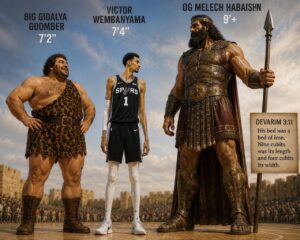
Since last Wednesday night when the basketball finals began between the New York Knicks and the San Antonio Spurs, basketball fans across the country and those watching around the world, have been treated to a rather unusual sight. The Spurs team is led by Victor Wembanyama (AKA: Wemby), one of the tallest players ever to grace a basketball court. Officially listed at 7’4″, though one TV commentator has him at 7’5”, Wembanya looks less like a point guard and more like a telephone pole that somehow learned how to dribble and shoot. Watching him play is almost unsettling. When he stands next to ordinary people, they appear child-sized. Every time he touches the ball, announcers cannot help themselves. They talk about his height, his wingspan, his reach and his size. Is he taller than Big Gidalya Goomber about whom we have written in the past? And for perspective, the average NBA player is around 6′ 6″–6’7″. While talking giant basketball players, let’s also shout out Yao Ming at 7’6” and Manute Bol at 7’6”. This Wemby guy is taka big but is he bigger and taller than Oig Melech Haboshon, the giant Moishe talks about in Sefer Devorim? And is he taller than the giants mentioned? At 7′ whatever, Wemby taka looks like a giant among basketball players. Yet, had he joined the miraglim -the main storyline of this week’s parsha- as they recontoured the land in advance of the original master plan to enter the promised land, our Sages might just have described him as one of the grasshoppers. More on them soon.
It’s taka emes that long before basketball fans marveled at Wembanyama, Chamberlain, Abdul-Jabbar, Yao Ming, and other towering athletes, the heylige Toirah had introduced us to real giants. How long before? The first mention of giants appears thousands of years, perhaps more than 5500 years before the invention of basketball. As an aside the game of basketball was officially invented on December 21, 1891, by Dr. James Naismith, a Canadian physical education instructor at the International YMCA Training School (now Springfield College) in Springfield, Massachusetts. The average height of players back then was between 5’6” and 5’ 9”. Veyter.
Way back in Sefer Bereishis, we were introduced to the mysterious Nefilim. They were giants and Rashi told us they were troublemakers. They chapped women at will and in many cases, against the will of the women, if you chap. What became of them we don’t know with certainty because we did not hear about them again until later in this week’s parsha where the miraglim return from their spy mission with alarming news. They report having seen the Bnei Anak, descendants of giants. For context, this week’s parsha takes place in year two following exodus from slavery. The miraglim report that the Nephilim, the B’nai Anok (all of them giants) are still around, very much alive, and they, the Jewish spies, are retelling how they themselves were “as grasshoppers in their eyes.”
Thirty-eight years later, in year 40 of traversing the midbar and just weeks -or a few months before entering the promised land, Moishe reminds the nation about Oig Melech Haboshon, perhaps the most famous giant in all of Tanach. We have spoken of Oig several times in the past – we shall not repeat. That said, we must agree that Oig was perhaps the most famous giant in the entire heylige Toirah. According to a famous medrish, Oig himself survived the Mabul. Indeed, our sages (Chazal) tell us that Oig’s story stretches all the way back to before the Mabul itself. Whether Oig personally survived the Mabul, as Chazal teach, or whether he merely descended from that ancient race, one fact is undeniable. The giants simply refused to disappear. From Bereishis to Shelach, from Shelach to Devorim, and from Devorim to the days of Dovid Hamelech, the giants keep reappearing. And when Moishe revisits the story in Sefer Devorim, he goes out of his way to tell us something seemingly strange. The heylige Toirah (Devorim 3:11) records the dimensions of Oig’s bed. Let’s read that innaveynig.
כִּי רַק־עוֹג מֶלֶךְ־הַבָּשָׁן נִשְׁאַר מִיֶּתֶר הָרְפָאִים הִנֵּה עַרְשׂוֹ עֶרֶשׂ בַּרְזֶל הֲלֹה הִוא בְּרַבַּת בְּנֵי עַמּוֹן תֵּשַׁע אַמּוֹת אָרְכָּהּ וְאַרְבַּע אַמּוֹת רָחְבָּהּ בְּאַמַּת אִישׁ
“For only Oig king of Bashan remained of the remnant of the Rephaim. Behold, his bed was a bed of iron; is it not in Rabbah of the children of Ammon? Nine cubits was its length and four cubits its width, according to the cubit of a man.”
Is this pertinent information? The heylige Toirah rarely tells us the dimensions of furniture. It does not tell us the size of Noiach’s dining room table. It does not tell us the dimensions of Avrohom’s couch. Yet when it comes to Oig, the Toirah suddenly becomes an interior decorator? What’s pshat? Of all the events that occurred during forty years in the midbar, the Toirah found it necessary to preserve the dimensions of a piece of bedroom furniture? Had we heard this information about Reuvain’s bed, we would have chapped, ober Oig? What’s pshat? Why? The posik tells us that Oig’s bed was made of iron and measured nine amos long and four amos wide. Depending on how one calculates an amah, Oig’s bed was somewhere between thirteen and eighteen feet long. That’s what I call a bed! The obvious implication is that Oig himself was enormous. Ober, why do we need to know that? The Toirah could simply have told us that Oig was tall. Why preserve measurements? Why discuss furniture? Why not move on to the next story? Is it because Oig was not merely a giant? He was the giant! The last remnant of an ancient race. Might we kler that the heylige Toirah davka wants us to picture him standing before the Yiddin and then remember one simple fact: that he fell? The largest giant in Tanach became a footnote in Jewish history.
Later still, in the Novee, Dovid Hamelech battles Golyas (Goliath) and other descendants of the ancient giants. The heylige Novee (Shmuel I 17:4) tells us this about the famous David versus Goliath battle:
וַיֵּצֵא אִישׁ־הַבֵּנַיִם מִמַּחֲנוֹת פְּלִשְׁתִּים גָּלְיָת שְׁמוֹ מִגַּת גָּבְהוֹ שֵׁשׁ אַמּוֹת וָזָרֶת
“And there emerged a champion from the camp of the Philistines, Golyas was his name, from Gath; his height was six cubits and a span.”
Then Dovid’s famous response in posik 45:
אַתָּה בָא אֵלַי בְּחֶרֶב וּבַחֲנִית וּבְכִידוֹן וְאָנֹכִי בָא אֵלֶיךָ בְּשֵׁם ה’ צְבָאוֹת
“You come to me with sword, spear and javelin, but I come to you in the Name of Hashem Tzevakos.”
The bottom line: That giant trusted size, Dovid trusted the RBSO. But there’s more. This is the section almost nobody remembers, but in Shmuel II Chapter 21 posik 22, the Novee records several wars against descendants of the giants.
אֵלֶּה אַרְבַּעַת יֻלְּדוּ לְהָרָפָה בְגַת וַיִּפְּלוּ בְיַד דָּוִד וּבְיַד עֲבָדָיו
“These four were born to the giant in Gath, and they fell by the hand of Dovid and by the hand of his servants.”
The giants who terrified the spies become a footnote: “And they fell.” That’s it. History moved on. The giants were taka a resilient bunch and we have spoken of them in prior postings. Ober, after reviewing Parshas Shelach just before the heylige Ois took off on a red red-eye back to New York, I began wondering about a different question. The question is not whether giants existed. The heylige Toirah tells us they did! The question is: why won’t they go away? Think about it. The Nefilim first appeared before the Mabul. The world was destroyed. Nearly all mankind was wiped out but not the giants. Generations passed and yet, somehow the giants were still around? The Yiddin left Mitzrayim and encountered giants. The miraglim arrived in Israel and encountered giants. Yehoshua entered the land and encountered giants. Dovid Hamelech arrived centuries later and there were still giants. They were not of the “gentle-giant” variety. One begins to wonder whether the RBSO intentionally preserved them. And why? What role did they serve? Did their descendants become famous basketball players? Were they all bad? Or, were some good guy giants; teddy bear type giants?
Coincidence? Hardly. The giants survived the Mabul. Their descendants terrified the miraglim. Oig survived until the days of Moishe. Golyas appeared centuries later. At some point one begins to suspect that the RBSO was preserving them. Not because He admired them. Not because He needed them. But because every generation needed to confront something that appeared unconquerable. The giant was never the story. The giant was the classroom. There was a reason the RBSO kept them around. Seemingly, the Yiddin needed to encounter them from time to time. Perhaps they were there to teach the Yiddin lessons about the RBSO and themselves. Let’s dig deeper.
The first time the Yiddin encountered the giants in our parsha, panic immediately broke out. The miraglim reported: “V’shom ro’inu es haNefilim, bnei Anak min haNefilim.” There we saw the giants, descendants of the giants. The next words they utter are perhaps the most revealing words in the entire parsha. “Vanehi b’eineinu kachagovim.” We were like grasshoppers in our own eyes. Notice what frightened them. Not merely the giants themselves. The giants were large, ober the miraglim suddenly became small. And that raboyseyee, may be the hidden story of Shelach. The giants were not the problem. The loss of confidence was the problem. The fortified cities were not the problem. The loss of faith was the problem. The descendants of Anak were not the problem. The belief that they were unconquerable was the problem. And perhaps that is why the RBSO kept introducing giants into Jewish history. Because every generation eventually encounters something that appears unconquerable. For Avrohom Oveenu it was Nimroid. For the Yiddin in Mitzrayim it was Paroy. For the generation of the Midbar it was the giants. For Dovid Hamelech it was Golyas (he had no issue conquering Batsheva, if you chap).
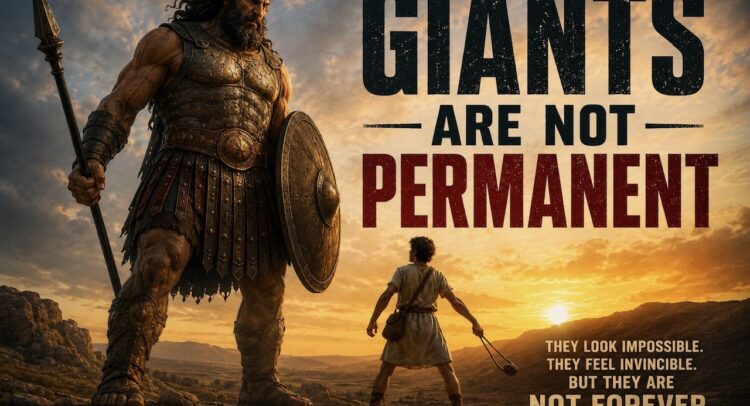
The bottom line: A giant’s greatest weapon is not his size; it is his ability to convince us that he is permanent. Egypt looked permanent. Babylon looked permanent. Rome looked permanent. The Third Reich looked permanent. The Soviet Union looked permanent. The giant always looks permanent. The giant never is. We should kler that the heylige Toirah wants us to appreciate just how impossible these challenges appeared. The RBSO wanted future generations to visualize Oig. To picture him. To imagine standing before him. To feel what the Yiddin felt when they heard that a giant ruled Boshon. And then to remember one more detail. He fell. The medrish is replete with gevaldige imagery of how Moishe killed him. The biggest giant in the Toirah fell. The giant whose bed required special mention in the Toirah became another chapter in Jewish history. Perhaps that is exactly why the heylige Toirah records his dimensions. Not to glorify Oig but to glorify the RBSO. The larger the giant, the greater the Kiddush Hashem when he falls. Had Oig been ordinary, people might have credited military strategy. Had Oig been average-sized, they might have credited superior tactics. Instead, the RBSO arranged matters so that no one could mistake the outcome. The giant was not the story. The giant was the setup. The story was what happened after he fell.
The bottom line: Every generation gets its giants. Every generation encounters something larger, stronger and seemingly more powerful than itself. In fact, every family and every person encounters that one thing that causes the person to lose faith and give up. To not believe the RBSO can take care of that problem in the blink of an eye. The question is whether that giant becomes bigger than the RBSO in our minds. Most of the miraglim looked at the giants and concluded that the mission was impossible.
Kolave, whom the RBSO mamish loved (as an aside, more people should -so says the Ois- name their baby boys Kolave) looked at the very same giants and reached the opposite conclusion. The disagreement was not about the facts. Everyone saw the giants. Everyone saw the walls. Everyone saw the armies. The disagreement was about what those facts meant. The miraglim believed that size matters; that size determines outcomes. And taka, at times, we all fall for that size matters narrative. Kolave (and Yehoshua) believed that the RBSO alone determines outcomes. And that’s what I call a pshat though I can’t find a real source for it. Is the heylige Ois giving his own Toirah? In this case and in a few others, yes! Mamish so gishmak.

As I have been watching the Knicks -now up 3 to 1- battle the Spurs, another thought occurred to me. The Knicks’ best player, Jalen Brunson, stands about 6’2″. Victor Wembanyama towers over him at 7′ and four or five inches. Standing side by side, the difference is striking. One man looks almost ordinary by NBA standards. The other looks like he was assembled in a laboratory. And yet, every time the ball is tipped, nobody simply hands the game to Wembanyama. Why not? Because basketball games are not won by height alone. They are won by determination, confidence, preparation, teamwork and belief. A shorter player who believes he can win often defeats a taller player who appears unbeatable. In fact, every Knick fan watching this series believes that Brunson and the Knicks can beat Wembanyama and the Spurs. If they did not believe it, they wouldn’t bother showing up. So happens that last night, they showed up late but just in the knick of time!

And perhaps there is a lesson there. The miraglim saw giants and immediately assumed the game was over before it started. Kolave and Yehoshua saw the same giants and believed otherwise. The difference was not the size of the giant. The difference was the size of their emunah.
In our times, we Yiddin here in New York, along with Jews throughout the world find themselves facing another giant, this one rooted in antisemitism which has once again raised its ugly head. The hatred is loud. The hatred is visible. At times it feels overwhelming. University campuses, city streets, social media and even governments have become arenas where old hatreds are once again openly expressed.
Ober not to worry because we need to chap that though the hate mongers seem to be the new permanent norm, we need to remember that these giant haters too will be vanquished. The lesson of Shelach is that we dare not become modern-day miraglim. The enemies of the Jewish people always appear larger than life while they are standing before us. Paroy looked invincible and Homon looked unstoppable. Rome looked eternal. Hitler imagined a Reich that would last a thousand years. The Soviet Union looked indestructible. They are all gone. The Jewish people remain. The giant always looks permanent. The giant never is.
Today the giant is antisemitism. Tomorrow it will be called by another name. The faces change. The slogans change. The hatred changes its wardrobe every few generations. But the test remains exactly the same. Will we think like the miraglim? Or will we think like Kolave? The meraglim saw the giants and imagined they would dominate forever. Hundreds of years later the Novee sums up their fate in six simple words: וַיִּפְּלוּ בְיַד דָּוִד וּבְיַד עֲבָדָיו
“And they fell by the hand of Dovid and his servants.” And just like that, they were gone. The giant -even Wemby- looks permanent. The giant never is. Ask OG!
A gittin Shabbis!
The Heylige Oisvorfer Ruv
Yitz Grossman
