Raboyseyee and Ladies,
The Chelbino Revisited:
Shoin, just the other day, as the heylige Ois and eishes chayil were walking off their Purim Seuda along Harding Avenue in Surfside, Florida, we bumped into some family and a gentleman I have known since I was five years old. In the course of conversation, he asked how long it took me each week to put out the parsha review. That was a good question. The answer is azoy: Most of the time, it’s an effort that begins the previous Shabbis and ends only on the following Thursday a few hours before publication. I work at it and improve it little by little all week. But, what to do when I landed only last night and didn’t have a minute all week to prepare? And what if I was glued to Fox (maybe a shtikel addicted) during these days when the story of Purim is being played out in a new Purim story in our times, and could not concentrate on writing? Not to worry because the heylige Ois dug into his own archives and found this gevaldige review originally written in 2013. Here is it with many edits and additions. Yes, a repeat and why not? Do you remember what you had for dinner last week? Not! Zicher you don’t recall what you may have read back in 2013!
Gevaldige news for those suffering from mild, moderate, or catastrophic ADD. This week’s parsha of Ki Sisa is mamish a full buffet. A Toirah shmorg. A census of the Yiddin. Shabbis observance. The Ketoires and its mysterious spices. More on those below. The eygel (Golden Calf). Moishe smashing the Luchis. The near annihilation of the newly formed Jewish nation. Moishe davening like his life depends on it—because it does. The revelation of the Thirteen Middos of Rachamim. Forgiveness. A national collapse followed by national rehabilitation. And somewhere in the middle of all that—Yumi Kippur makes an early guest appearance in the middle of March. Tell me our heylige Toirah isn’t the beste schoira in town, avada it is.
Ober, where to begin? Ki Sisa is so packed with action that trying to cover everything in a few pages is like trying to finish an entire cholent pot at the kiddush by yourself. Possible? Maybe. Wise? Not so much. Nu, lommer unfangin. First things first. If you have a son named Betzalel and you’re planning a bar mitzvah speech, this is your parsha. Speech material galore. Mamish unlimited. On the other hand, if your name is Chur, Aharoin, or even Moishe Rabbaynu himself, you might want to sit this one out. Chur didn’t make it out and as to Moishe and Ahroin, well, they had better days before and after. And truth be told, most of the Yiddin might also prefer to skip this parsha entirely, seeing as it’s the one where they came within a hairsbreadth of being wiped out completely. Mamish annihilated.
Said the RBSO to Moishe, “Leave Me alone and I will destroy them and make from you a new nation.” Shoin. Imagine Jewish history rebooted. Version 2.0 starting with Moishe and his family. Given that Moishe’s eishes chayil, Tzipporah, came from Midian and was likely several shades darker than your average Lakewood shidduch résumé, one can only imagine what the new chosen nation might have looked like. Ver veyst!?
That said, before we get to the farsthunkina eygel caper and the national meltdown that followed, let’s talk about the wunderkind of the parsha—Betzalel. Out of nowhere, mamish from total obscurity, a thirteen-year-old boy suddenly gets the biggest promotion in Jewish construction history. The RBSO Himself appoints him project manager of the Mishkan. Thirteen years old. These days, a thirteen-year-old struggles to assemble an IKEA bookshelf without leftover screws and an emotional meltdown. Betzalel is tasked with building the Mishkan, the Aron, the Menorah, the Shulchan, the Mizbayach, and every intricate vessel described throughout Sefer Shmois. Not bad for a kid who just got his bar mitzvah. The heylige Toirah introduces him with unusual fanfare: “I have called by name Betzalel son of Uri son of Chur from the tribe of Yehuda, and I have filled him with the spirit of G-d, with wisdom, understanding and knowledge.”
Nu, the Heylige Toirah rarely gives such detailed genealogy unless something important is happening. Betzalel is not just Betzalel. He is Betzalel ben Uri ben Chur. Which naturally leads to the question: who exactly was this Chur, the zeyda who gets the double shout-out. The medrish offers two possibilities. Either Chur was Miriam’s husband, making him Moishe’s brother-in-law, or he was Miriam’s son, making him Moishe’s nephew. Either way, he had impressive yichus. His lineage traced back through Yehuda, Peretz, and the royal line that would eventually produce Dovid Hamelech and Moshiach. Sounds impressive but did all that yichus help him? Not! Es hut gurnisht geholfen because Chur’s story in this parsha ends the way many Jewish stories do—with a mob. According to the medrish based on the heylige Gemora in Sanhedrin, when the crowd began demanding an idol after Moishe failed to return on schedule, Chur stood up and tried to stop them. Bad career move. The same people who heard the RBSO speak on Har Sinai only forty days earlier responded by stoning him to death. Not exactly a shining moment for the newly minted Chosen People. But the RBSO does not forget heroism. And in this very parsha, Chur’s grandson Betzalel is elevated to build the Mishkan, the earthly home of the Shechinah. A zeyda gives up his life defending the RBSO’s honor, and a generation later his einikel is chosen to build the RBSO’s house. Gishmak and that’s what we call yichus that pays dividends.
But now let’s ask the uncomfortable question. How could the Yiddin fall so fast? Forty days earlier they stood at Har Sinai and heard the RBSO Himself proclaim the Aseres Hadibris. They witnessed the ten plagues. The splitting of the Yam Suf. Mun falling from heaven. Water from rocks. A daily miracle schedule that would make Netflix look boring. And yet forty days later they were dancing around a golden calf? What’s pshat, what happened? The midroshim offer many explanations. Some blame the Erev Rav, why not? Some blame a miscalculation of Moishe’s return date. Others say panic set in when the people thought their leader had died. But the heylige Zoihar suggests something more subtle, and more frightening. The people did not necessarily want to replace the RBSO. They wanted a medium. For centuries in Egypt, they were surrounded by idols and intermediaries. Every nation had a physical representation of its god. The Yiddin had Moishe. And suddenly Moishe was gone. They felt spiritually orphaned. Says the Zoihar that the people sought a physical symbol through which the Shechinah could reside—something that would replace Moishe as their intermediary. Chur chapped immediately how dangerous this idea was. He chapped that every Yid has a direct relationship with the RBSO. No middlemen. No idols. No substitutes. Apparently, the mob disagreed. Fast forward a few minutes and Chur was dead, the Eygel was built, and the newly minted but hapless Yiddin were dancing around a golden statue like intoxicated pagans. And when Moishe retuned and witnessed the spectacle, he did something shocking.
He smashed the Luchis. The holiest objects ever created. Written by the finger of the RBSO Himself. Smashed. Asks Rabbenu the obvious question: how could Moishe possibly do such a thing? One explanation is that Moishe saw the letters flying off the Luchis. The divine writing departed, leaving only lifeless stone. Without the letters, the Luchis were like a body without a soul. And what do we do with a body without a soul? Shoin and veyter. The Yiddin had just made the farsthunkina Eygel, Chur was dead and Moishe smashed the Luchis, now what? The nation was panicking and the was not happy with His people. So what comes next?
You’d think maybe a national crying session. Or forty more days of davening in the desert. Ober what does the heylige Toirah do? It suddenly starts talking about spices and incense. And at first glance, it looks like a complete non-sequitur but if you chap carefully, the heylige Toirah is about to teach a profound lesson as it segues into the topic of the Ketoires and here we go. The Ketoires — sometimes called Ketoires HaKodesh — was the special incense used in the Mishkan and later in the Beis Hamikdash. Not just any incense. Mamish holy. It was burned daily on the golden Mizbayach in the Koidesh HaKodoshim, in the morning and in the evening — right after the daily Korban Tamid. Two times a day, smoke rising straight up. That was the official appointment. Not optional. Not for show. Why? Because the Ketoires represented spiritual elevation. Every Jew, even the farthest sinner, was included. The smoke was a sign of prayers ascending — our connection to the RBSO.
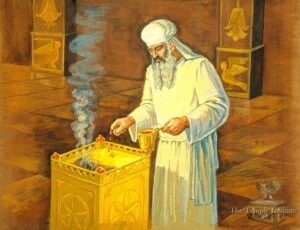
Among the eleven spices making up the ingredient list, was one called Chelbino. There were mamish eleven? That’s not what the heylige Toirah tells us in our parsha, is it? Not! What does it say? The heylige Toirah in our parsha (Shmois 30:34) explicitly lists only four ingredients, ober our holy and very knowledgeable Sages teach us that the full formula contained 11 spices, which are detailed in the heylige Gemora (Krisus 6a). How did four become eleven? That math for another time but let’s read the posik innvaynig:
וַיֹּאמֶר יְ־הוָה אֶל־מֹשֶׁה
קַח־לְךָ סַמִּים
נָטָף וּשְׁחֵלֶת וְחֶלְבְּנָה
סַמִּים וּלְבֹנָה זַכָּה
בַּד בְּבַד יִהְיֶה׃
English:
“And the Lord said to Moses:
Take for yourself spices — stacte, onycha, and galbanum — spices, together with pure frankincense; each shall be in equal measure.”

As mentioned, in Heyilge Gemora, the list grew from four to eleven and here they are:
1 — צרי (Tzori / Nataph) Often identified as stacte, a balsam resin.
2 — צפורן (Tziporen / Shecheles)- Onycha — a shell-derived aromatic.
3 — חלבנה (Chelbena)- Galbanum — the bad-smelling spice
4 — לבונה (Levonah)- Frankincense.
5 — מור (Mor)- Myrrh.
6 — קציעה (Ketzi’ah) – Cassia.
7 — שבולת נרד (Shibolet Nerd)- Spikenard.
8 — כרכום (Karkom)- Saffron.
9 — קושט (Kosht)- Costus root.
10 — קלופה (Kilufah)- Aromatic bark.
11 — קינמון (Kinamon)- Cinnamon.
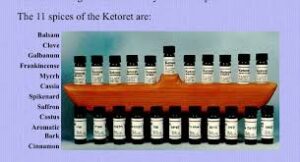
FYI, our Sages also listed the following preparation agents:
- בורית כרשינה – lye from vetch; • יין קפריסין – Cyprus wine; • מלח סדומית – Sodom salt; and, • מעלה עשן – special herb that made the smoke rise straight upward.
All seem to agree that the Chelbino smelled terrible. A foul, pungent odor. Ober, does the heylige Toirah tell us -anywhere- that the Chelbino had a bad odor? It does not? Oib azoy, if that’s the case, who decided that it did? How do we know it stinks? An excellent question because the heylige Toirah while listing the four ingredient says no such thing! And the answer -as kimat always- is found in the heylige Gemora which explicitly tells us: “Chelbino smells foul, yet it was included among the incense to teach that sinners are included among the Jewish people.” Our Sages (Chazal) call it ריחו רע — its odor is bad. Not a little off. Not just “strong.” Foul mamish. Gag-inducing if you burned it alone. But in the Ketoires, blended with all the other spices? It worked. Perfectly. Divine chemistry. Is so happens that modern botanists confirm it: Chelbino is galbanum resin from the Ferula plant. Burned, it gives a pungent, acrid smoke, only bearable when expertly mixed with the other ten spices. The bottom line: even secular science back up Chazal. Not that we needed it; nice to have.
For some reason the Heylige Toirah commands that it be included with the other spices. Why include a foul-smelling ingredient? Our very clever Sages chapped that if the RBSO said to include this ingredient there must be reason even though the RBSO did not provide one. They made one up and it goes like this: The Chelbino represents the sinners among the Jewish people. Just as the incense must include the foul-smelling spice, so too the community must include its imperfect members. Without them, the mixture is incomplete. Exhale! We are good and part of the mix, maybe even a necessary ingredient? You hear this raboyseyee? It includes all kinds of Jews — the righteous, the mediocre, the farsthunkina sinner — just like the Chelbino spice, foul-smelling but essential. Is this a subtle hint that even after disaster, the RBSO insists everyone belongs, and even the stinky ones can contribute to the fragrance of the nation? What would a shul or community look like without a few rabble rousers and troublemakers? They mamish need us. And says the Maharsha so gishmak azoy: If you have ten righteous Jews, you may include a sinner as number eleven. But the sinner cannot be the tenth. In other words, the Chelbino belongs—but it cannot define the fragrance. The sweet aroma represented the righteous, the bitter aroma represented the sinners, and the entire mixture symbolized the Jewish nation as a complete unit. Mamish a reminder that inclusion is holy, and the entire nation rises together toward Hashem. Shoin.
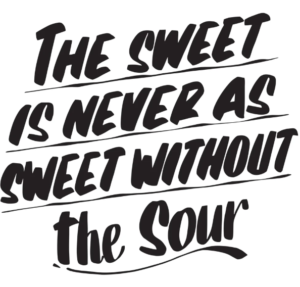
Says the heylige Ois azoy: Looking around most communities today, we seem to have plenty of Chelbinos. Some smell spiritually better than others. Some wander. Some struggle. Some fall off the wagon once or twice — or ten times. But the heylige Toirah’s message is clear. They still belong. The Ketoires is incomplete without them. And if we’re being honest—really honest—most of us -even the good guys- carry a little Chelbino inside ourselves. Some days we smell like the sweet spices. Other days, not so much. But the RBSO created His nation as a mixture. Fragrant spices blended together with the occasional foul one. And somehow, when the mixture is right, the aroma rises heavenward as something beautiful. Shoin.

So next time you encounter a Chelbino in your community, don’t rush to throw him out. Just make sure there are enough sweet spices around to balance the fragrance. And if you look in the mirror and discover that you yourself are occasionally the Chelbino— Nu… at least you know you’re still part of the Ketoires. Even after the biggest sin of all time, the eygel, pshat could be that the heylige Torah introduces the Ketoires. Why? To show us that even after the worst mistakes, there is a path to atonement. Not only that, but it had to include everyone in the nation — even the Chelbino, the stinky spice — to show that no one is left out of the process of returning to the RBSO.
The bottom line: if you were wondering why the heylige Toirah segued from the Eygel to Ketoires, pshat is azoy: Even after disaster, communal to personal, the RBSO insisted that the nation was whole; all members, bitter and sweet, must be included. The sinners came close, but in the end, did not destroy the entire nation. The Chelbino too did not ruin the fragrance. When blended properly with the other spices, it enhanced the aroma. We the Yiddin work the same way. Some are fragrant, some are not. Some rise straight upward, some wander. But when the mixture is right, the entire nation together, our collective fragrances rise directly to the RBSO and He watches over us.
A gittin Shabbis –
The Heylige Oisvorfer Ruv
Yitz Grossman
