Raboyseyee and Ladies,
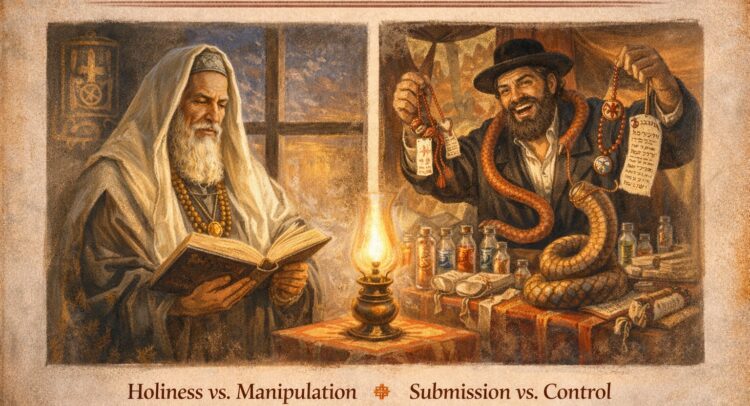
The Snake, The Mekubal & The Snake Oil Salesman:
Humm, what have these in common?
This week’s parsha post is coming to you from Miami, where the weather is quite terrible but who cares? It’s actually helping as the Ois who has things to do and getting them done when its cloudy, rainy, and otherwise not very pleasant, is mamish givaldig! Shoin, let’s begin.
Long before the first velvet-curtained magic shows, before top hats, trapdoors, and sleight-of-hand became respectable entertainment, the ancient world was already spellbound by the idea that reality itself could be bent, manipulated, and mastered. Magic was not a diversion; it was a worldview. In the ancient imagination, it explained how the universe worked, who held power, and why some ruled while others obeyed. And nowhere was this worldview more developed, more institutionalized, or more dangerous than over in Mitzrayim (Egypt) which is the center of attention in this week’s parsha.
Egypt was not merely a political superpower. It was a metaphysical one. Magic—heka—was considered a fundamental force of nature, as real as water or fire. Paroy ruled not only by crown and whip, but by occult mastery. His priests, the chartumei Mitzrayim (סְרִיסֵי מִצְרַיִם), were not stage performers in the modern sense; they were trained professionals in ritual, incantation, symbolic action, and the manipulation of hidden forces believed to govern the cosmos. Power, in Egypt, meant control. If you could manipulate reality, you understood it. If you understood it, you ruled.
And it is precisely into that world that the RBSO sent Moishe and Aharoin not with philosophical proofs, not with ethical arguments, not with theology lectures, but with acts that—at first glance—look suspiciously like magic itself.
A staff becomes a serpent. Water turns to blood. Moishe and Aharoin were there to perform magic; it’s not an everyday occurrence that a stick becomes a snake and farkert. Avada, we know many that play with snakes hoping to tun them into staffs, if you chap, but that for another day. The bottom line: Paroy is unimpressed. His magicians can do the same (Shmois 7:8–12). And the Heylige Toirah does something deeply unsettling: it records this incident without embarrassment, without apology, without rushing to reassure the reader that “it wasn’t real.” One must wonder what Moishe and Aharoin were thinking when Paroy’s kishefmachers (the Chartumei Mitzrayim) were able to replicate Moishe’s tricks.
Which raises the uncomfortable question we usually rush past: Did the RBSO deliberately send Moishe and Aharoin into Paroy’s court to perform what looked, at least initially, indistinguishable from Egyptian magic, knowing full well that Paroy’s own magicians could replicate it? Did He, in effect, set them up to be challenged, even embarrassed, at the very first demonstration of divine authority? Were they set up to fail? Think about that for a second. Imagine being Moishe. You step into the throne room trembling; your staff becomes a serpent/snake but then the Egyptian magicians throw down theirs. Your miracle is mirrored. Your sign is copied. OMG! What do you feel? Confusion? Fear? Shame?
What is it about the snake or serpent (as an aside, for this week’s column, the Ois does not distinguish between the two) that the RBSO decides to employ it over and again as His agent? What’s up with the RBSO and the snake? Was the snake designated to do the RBSO’s bidding? Was it created davka to wreak havoc and get people in trouble? It does from its early history so epes appear. Shoin, let’s find answers.
Ironically, we lost -as in passed away- our forefathers and mothers along with all the main characters we met in Sefer Bereishes; not a one will be heard from again until we begin the new cycle of Toirah reading on Simchas Toirah. That said, there is one exception. One character we met in Bereishis is back in Sefer Shmois. We met him last week and he’s back for an encore. He’ll be back again Sefer Bamidbar. Who is this character? Grada this is a trick question; at least a few readers will be amazed with the answer. One more hint: like a few other Toirah characters, he goes by more than one name. Got it?
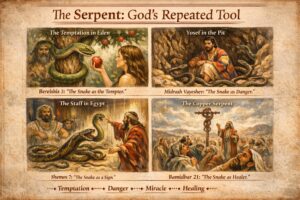
Let me reintroduce you to the nochosh, the snake (aka: the serpent) and let us review the different roles he played in Sefer Bereishis. We first met him mamish in Parshas Bereishis when he still stood upright –according to the medrish- in more ways than one, if you chap- and whose mission was to test Chava. He did this through his cunning personality and taka he was successful. According to a medrish, he mamish slithered his way in, if you chap. You all avada know the rest of the story. Odom, Chava and the snake were all punished; medrish tells us that each punishment was for life, ad hayoim hazeh (until today). Yikes!
Though chopped down to size, and now but a slithering shell of himself, the snake does appear one more time in Bereishis. We met him when Yoisef’s holy brothers –let’s give them one more shout out- who out of sheer jealousy, threw their little brother into a pit. Rashi tells us the pit had no water; it did however contain snakes and scorpions. Yikes! The RBSO made sure Yoisef was safe; he went on to become a hero for the Jewish people, as well for the goyim. Gishmak. In its two Bereishis appearances, the snake -as employed by the RBSO- appears once with sexual desires on Chava. Says the medrish that the snake’s mission was to seduce Chava and share his emission, if you chap. That same medrish tells us he was successful and that Chava actually gave birth to various semi-human creatures. Only after another 130 years elapsed did she give birth to another human son. As an aside, at least one medrish (Pirkei D Rebbe Eelezer) tells us that Kayin was born out of a shtikel relationship between Chava and the snake. Hec, it’s medrish where seemingly anything goes and comes, if you chap. And if you think that medrish is out there in lala -land- mamish beyond the pale- another tells us that the snake was even more nefarious. With an eye on Chava, and knowing that eating the forbidden fruit would certainly cause instant death (so the RBSO explicitly warned Odom), he intended to have Odom killed by passing her the forbidden fruit which she would then pass onto her husband. And then? With Odom dead, the snake planned to marry Chava! Mamish a snake! You hear this raboyseyee? The snake wanted the woman. The bottom line: when a snake wants a woman, if you chap, it will stop at nothing; it will say anything, do anything, spend money, dress up or down, and more; it stops at nothing. And that’s taka how it’s been ever since!

As we got to Sefer Shmois, last week’s parsha, and again this week, the RBSO has the snake on a new mission: this time his job was to be Moishe’s assistant. He will be appearing in a supporting role, but he must first perform a few tricks, again directed by the RBSO. Let’s set the scene. After some period of time –at least decades- Moishe is brought back from exile (recall how he fled Mitzrayim decades earlier after whacking the Mitzri goy. Recall also how he settled into Midian, how he met and married Tzipoirah, how he fathered two boys, how he worked for his father-in-law as a shepherd (grada not the first instance in the heylige Toirah where a son-in-law joined the family business, zicher you recall how Yaakov too worked as a shepherd for his cunning shver –FIL), how the RBSO appeared to him at the sneh (burning bush), and how reluctant Moishe was to take on the job as redeemer of the Yiddin.
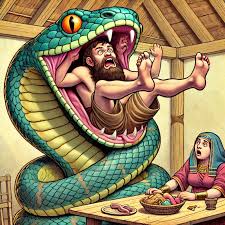
Enter the snake; he’s back, and is seemingly not a small part of the RBSO’s strategy. Oh, let’s not forget what happened –also last week- en route. Moishe, accompanied by his eishes chayil (wife) and two boys had yet another encounter with snakes, as in two of them. One medrish told us that one swallowed Moishe from his head to his eyver (penis) and a second, from his toes to his zach (appendage) until Tzipoira who saw that only the penis was left exposed, figured out what the message was and took matters –as well as a sharp stone- and performed a bris right then and there on one of their sons. Which one was yet to have a bris? That is of course the subject of a machloikes (debate), but given that he had but two sons, it was zicher one of them. The bottom line: this time the RBSO used the snake as His personal messenger; a bris was seemingly overdue and the snake’s mission was to remind Moishe. Veyter.
Also last week, Moishe doesn’t know what to make of the RBSO seeking to hire him, he feels unqualified. He has questions, he wants more information. When Moishe was first presented with his mission to lead the Yiddin out of Mitzrayim, he hesitated. He was concerned that neither the people nor Paroy would believe that he had actually been sent by the RBSO. The RBSO, understanding the frailties of man, came up with a plan to bolster his confidence. Said the RBSO to Moishe that He would give him signs to prove that he wasn’t suffering from heat stroke as a result of his proximity to the burning bush. A burning bush is no joke. Says the heylige Toirah (Shmois 4:2-4), azoy: Hashem said to Moishe, “What is that in your hand?” Moishe replied, “A staff.” Hashem told him, “Throw it to the ground.” He threw it to the ground and it became a snake, and Moishe fled from before it. Hashem said to Moishe, “Put out your hand and grab it by the tail.” Moishe put out his hand and grabbed it, and it became a staff in his hand. OMG, the snake is back! Shoin, after one more sign during which Moishe’s hand was suddenly full of Tzora’as (think rash, pimples and more), Moishe was convinced and off to Mitzrayim he was. At times, a snake in the hand goes a long way. Shoin!
Though Moishe initially ran away from the snake, like most things repeated -especially sins- his fear lessened the second time he was to perform the staff-to- snake-and then back routine. It worked like a charm, pun avada intended. Was Moishe the first snake charmer? As an aside, this lessened fear factor avada pertains to sins we commit, oy vey. At first, we’re overridden with guilt, ober as the days go on and we keep repeating the behavior, we convince ourselves that the RBSO isn’t going to chap us; He has bigger fish to fry. Shoin, thankfully Yom Kippur is never too far away. Says the heylige Toirah (Shmois 4:30): when Moishe arrived to Mitzrayim, he and his brother Aharoin performed their repertoire of signs for the Jewish People. In our parsha, he and his older brother Aharoin repeated the wonder of the snake in Paroy’s palace, with Aharoin acting as Moishe’s proxy. Says the heylige Toirah (Shmois 7:10-12):
10. Thereupon, Moishe and Aharoin came to Paroy, and they did so, as the Lord had commanded; Aharoin cast his staff before Paroy and before his servants, and it became a serpent. |
יוַיָּבֹ֨א משֶׁ֤ה וְאַֽהֲרֹן֙ אֶל־פַּרְעֹ֔ה וַיַּ֣עֲשׂוּ כֵ֔ן כַּֽאֲשֶׁ֖ר צִוָּ֣ה יְהֹוָ֑ וַיַּשְׁלֵ֨ךְ אַֽהֲרֹ֜ן אֶת־מַטֵּ֗הוּ לִפְנֵ֥י פַרְעֹ֛ה וְלִפְנֵ֥י עֲבָדָ֖יו וַיְהִ֥י לְתַנִּֽין: | |
11. Then, Paroy too summoned the wise men and the magicians, and the necromancers of Egypt also did likewise with their magic. |
יאוַיִּקְרָא֙ גַּם־פַּרְעֹ֔ה לַֽחֲכָמִ֖ים וְלַֽמְכַשְּׁפִ֑ים וַיַּֽעֲשׂ֨וּ גַם־הֵ֜ם חַרְטֻמֵּ֥י מִצְרַ֛יִם בְּלַֽהֲטֵיהֶ֖ם כֵּֽן: | |
12. Each one of them cast down his staff, and they became serpents; but Aharoin’s staff swallowed their staffs. |
יבוַיַּשְׁלִ֨יכוּ֙ אִ֣ישׁ מַטֵּ֔הוּ וַיִּֽהְי֖וּ לְתַנִּינִ֑ם וַיִּבְלַ֥ע מַטֵּה־אַֽהֲרֹ֖ן אֶת־מַטֹּתָֽם: |
Shoin: Aharoin threw down his staff before Paroy, it became a serpent! Paroy called upon his black magic peeps, seemingly every king has a few and shoin, they did likewise through their sorcery. Not to be outdone, Aharoin’s staff swallowed up their staffs! Ober, does the RBSO do party tricks? Does the RBSO need props? And was Paroy impressed by the snake bit? He was, but only for a moment in time. Ober raboyseyee, avada you all know that if the RBSO selected the snake as His messenger to give Moishe the signs needed to boost his confidence and also to perform before the Yiddin and even Paroy, avada He had a plan. The snake had a purpose. Specifically, what that was, ver veyst, ober more than a few have speculated. More typically, so we were taught, the RBSO gets things done in a more natural setting, ober when it came to Paroy and the Mitzrim, He seemingly pulled out all the tricks, including staff swallowing. The RBSO was about to unleash the makos, the plagues. As you can only imagine, the image of a staff that turns into a snake and wood being swallowed –taka no small miracle, if you chap, unless a rogue rebbe is involved- fired the imagination of our sages, who saw it as a symbol of the power struggle and relationship between the RBSO, Moishe, and Paroy.
Why did Moishe perform for Paroy the miracle of the serpent? Because says the medrish (Shmois Rabba 9:4): Paroy is compared to a serpent… When Moishe would leave Paroy’s presence, Paroy would say, “If I get hold of Moishe, I’ll kill him! I’ll hang him! I’ll burn him!” But when Moishe would enter the palace, Paroy would immediately become as a stick of wood.
Says the medrish (Midrash Tanchuma: Voera 11) that during the burning bush encounter -no one forgets one of those, if you chap- the RBSO revealed to Moishe what Paroy would be doing in the future. He asked Moishe, ‘What is that in thy hand?’ And he said: ‘A rod.’ And He said: ‘Cast it on the ground.’ And he cast it on the ground, and it became a serpent. And the Lord said unto Moishe: ‘Put forth thy hand, and take it by the tail.’ whereupon the snake changed back to a staff. G-d told Moishe, ‘Just as the snake twists and turns, similarly Paroy will twist and turn against all of you,’ as it is written, ‘Declaring the end from the beginning.’” In other words: the wriggling of the snake alludes to what will happen in the end to Paroy: The Egyptian ruler will “twist and turn against all of you” – that is, he will oppress the Yiddin and torment them until the RBSO liberates them from their bondage. In order to graphically illustrate what will happen in the future, the RBSO turned Moishe’s staff into a snake.
Ober why taka did the RBSO decide to bring back the nochosh (snake)? And why does he appear with a new name? Recall that he was known as the nochosh back in Bereishis but appears in our parsha as a “sanin” or “tannin.” Was his reputation sullied from his Bereishis activities? Did people in shul find out about his extracurricular activities with a married Chava? Did he undergo a name change? Hadn’t that seducing, conniving, murder-plotting nochosh already stirred up enough trouble? Weren’t both his appearances in Bereishis at least somewhat controversial? Why would the RBSO bring him back in a new role? What is it about that snake? Did the RBSO bring him out to perform party tricks? Does the RBSO use the snakes in cameo appearances? Did the performances by the snake in a supporting role inspire Paroy to let the Yiddin out any earlier? As an aside, since we mentioned snake trickery, now is a good time to give you a shtikel overview of a lost art called snake charming.
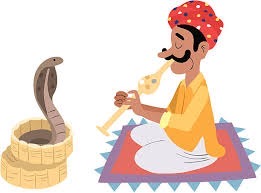
What is Snake charming? It is -so says the Achroin (latter day commentator) Wikipedia, azoy: snake charming is the practice of appearing to hypnotize a snake (often a cobra) by playing and waving around an instrument called a pungi. A typical performance may also include handling the snakes or performing other seemingly dangerous acts, as well as other street performance staples, like juggling and sleight of hand. The practice is most common in India, though other Asian nations such as Pakistan, Bangladesh, Sri Lanka, Thailand, and Malaysia are also home to performers, as are the North African countries of Egypt, Morocco and Tunisia. Ancient Egypt was home to one form of snake charming, though the practice as it exists today likely arose in India. It eventually spread throughout Southeast Asia, the Middle East, and North Africa/ Veyter (let’s move on)!
Back to the snake and his multiple roles as the RBSO’s assistant, protagonist and more. It does epes appear that in various Jewish texts, the snake has a fascinating and complex role to play in the narrative of the heylige Toirah, Novee, Gemora and Medrish. They all talk about him, a lot! Many argue and discuss his real identity. Was the snake human-like at some point? Did he talk? After all, he did walk, talk and also enjoyed a healthy diet of good fruit. Was he the Soton (Satan)? Exactly what his various roles are meant to convey, only the RBSO knows for sure; that didn’t however stop many exegetes from discussing and arguing over the meaning of its existence and what he represents.
Let’s read one more shtikel medrish: The rabbis said: even those things which you may regard as superfluous in the world, such as flies, fleas, and gnats, are also included in the creation of the world, and the Holy One, blessed be He, carries out His purpose even through snakes, scorpions, gnats, and frogs. You hear this raboyseyee? The snake is in fact part of the master plan; he slithers around waiting for his next appearance and mission. One paragraph later, the medrish tells us this: “Said Rebbe Tanchuma in the name of Rebbe Menachmo and Rebbe Berechya in the name of Rebbe Chelbo, azoy: Rebb Acho told the following story. A man was standing by the bank of a river when he saw a frog bearing a scorpion and carrying it across the river. As soon as the scorpion had carried out its mission, the frog carried it back to its place.” Again the medrish: and what was is the message from this story? “Three kinds of creations are found on land: cattle, creeping things, and wild beasts. Cattle were created to serve man, but wild beasts and creeping things were created to serve the purpose of God. The RBSO accomplishes His purpose by means of wild beasts, even by means of snakes, which do not even have feet…..”
That being said, in our parsha, the RBSO employs the snake to be Moishe and Aharoin’s assistant, a good guy role. Ober according to others, the snake is all bad all the time. On the other hand, he did perform his duties admirably. The bottom line: there are -to no one’s surprise- different approaches within our glorious Jewish tradition as to the identity of the biblical serpent. Says the Ibn Ezra: es ken zeyn (it’s entirely possible) that the snake in the Bereishis story was not literally a snake, but a metaphor for the Soton (Satan), or a similar evil force. The Sforno agrees: the nochosh is the yetzer horo (evil inclination). So also says the heylige Gemora (Buba Basra 16a): the evil inclination (יצר הרע) is equivalent to Soton. On the other hand, why is he considered the devil if his mission was to dupe Chava? And the answer? Ver veyst? One last view: Who was he? Says the RambaM: the entire myseh with the snake’s appearance with Chava never happened; the story is but allegorical. Why? Because snakes don’t talk! Grada the Rambam is known to believe that all instances of talking animals, are but ‘visions’ or allegory. Wow!
The bottom line: the RBSO seems to employ snakes as needed. He is blamed for Odom’s (Adam’s) foible in Gan Eden, the yetzer horo who schemed his way into Chava’s heart and perhaps even her hoizen (if you chap); he’s neutralized in the company of Yoisef. Two are sent to send Moishe a message; one is used by Moishe while the Mitzrim use a number of them, and they play dual roles later in Parshas Chukas (Bamidbar 21:5) where they are first sent to bite the Yiddin as punishment for complaining to the RBSO while traversing the midbar (desert). Moishe will then build a fiery serpent whose job is to heal those already snake-bitten. Ober close to home in this week’s parsha, in the showdown with Paroy, Moishe will rely on one as he transforms his staff into one.
And we close with an answer to the question posed 6 pages back. Was Moishe set up to fail when Paroy’s necromancers were able to replicate Moishe snake trick? Farkert! Not! The RBSO’s plan was mamish ingenious. He did not send Moishe to win a magic contest. He sent him to reveal the emptiness behind Paroy’s power. Paroy’s magicians could imitate, they could perform illusions, they could manipulate the audience’s eyes, but they could not create reality. They could bend appearances but only for a moment, only until the truth stepped onto the stage. The RBSO allowed them to do what they could, so that when they failed, when the staff of Aharoin swallowed their serpents, when their lice could not multiply, when their frogs and blood lost all credibility, it would not look like divine favoritism. The initial parity was not a flaw in the plan; it was the plan. For only after illusion is permitted to exhaust itself can truth be revealed as categorically different, not merely stronger. Across these episodes, the snake embodies danger, moral test, divine instruction, and the fine line between punishment and salvation. The RBSO does not “love snakes” any more than we do, they are simply perfect symbols: instinctual, fearsome, intelligent, impossible to ignore. They grab attention, awaken instinct, and teach lessons the heart cannot and this is exactly where the modern temptation sneaks in. People seek out miracle-working mekubalim, amulet-sellers, and “segulo experts,” and the pattern is eerily familiar. They promise influence, results, outcomes. They claim to manipulate reality. Sound familiar? That is Egypt, all over again. Authentic Kabbalah — from the heylige Zohar through the Arizal to the Ramchal does not teach human control of reality. It teaches responsibility within a Divinely structured universe. The true mekubal does not pull levers. He aligns himself with truth and prays that Hashem respond. “Anyone claiming control, guarantees, or techniques — rather than tefillah and submission — is replaying Pharaoh.”

And this brings us full circle to today’s final bottom line: Back on page 1, the Ois asked what the snake, the Mekubal & the snake oil salesman have in common? Drumroll and here’s the answer. Paroy never really left. We see him in every attempt to control reality through human trickery, specifically through miracle-working snake oil mekubalim, amulet sellers, and segulo experts. The Rambam forbids any attempt to command supernatural forces (Mishneh Toirah, Hilchos Avoido Zoroh 11:16) and says this: Anyone claiming personal supernatural power—regardless of holy garb—resembles Paroy’s magicians, not Aharoin. They promise results, manipulate perception, and create the illusion of mastery. The pattern is identical: humans are tempted by appearance over reality. Those who have their handlers sucking out your money, are but peddling snake oil. Beware!
A gittin Shabbis!
The Heylige Oisvorfer Ruv
Yitz Grossman
