Worth Repeating:
Raboyseyee: What you are about to read is not a repeat, not at all. The subject matter is all about repetition. Let us begin.
As we close out Sefer Shmois with this week’s double header parshas of Vayakhale and Pikudei, the heylige Ois must revisit a question that’s been on his mind these past sixteen years: Why did every rebbe in yeshiva teach that the heylige Toirah does not repeat concepts or even words? That it contains not a single extra word or even letter? These ideas were drilled into our heads over and again, and of course we didn’t question them. It must be so. Yet, anyone who reads the last third of Sefer Shmois carefully will notice something unusual. The Heylige Toirah dedicates an enormous amount of space describing the Mishkan. Four full parshas and then some. At least 4.5 parshas are about the Mishkan. Guess what? Vayakhale and Pikudei are mamish repeats; instead of instructions, we now have the actual work being completed successfully as instructed. What’s pshat here? Were the rebbes not speaking emes?
Would it have been so terrible if the rebbes taught us that indeed many concepts are repeated, some even many times? How many times has Shabbis observance been mentioned? At least a few to this point and yet, right here in our parshas dedicated to construction, we are again reminded about not working on Shabbis. That’s just one example; there are many. In fact, the heylige Toirah is chock full of very repetitive topics and information. It’s mamish the opposite of what we were taught. What’s pshat here? Why teach us something that is blatantly false?
Let’s find out how this not repeating rumor began. Or, is it taka emes? What is going on? As mentioned, mamish above, we first read the instructions for the massive Mishkan and its accoutrements back in Parshas Terumah, where the RBSO commanded Moishe how the Mishkan, the Aron, the Shulchan, the Menorah, the curtains, and the beams should be built. We also read of the instructions on how to fashion the ‘bigday kehuna’ – the garments of the Kohanim. Every dimension was given. Every material specified. Every detail is recorded. Fast forward to this week’s double header where the heylige Toirah describes the construction step by step. And suddenly the reader experiences a strange sense of déjà vu. The Heylige Toirah repeats nearly the entire story again. There is no hiding. Betzalel builds the Ark. Betzalel builds the Shulchan. Betzalel builds the Menorah. The craftsmen weave the curtains. The beams are constructed. The garments are sewn.
And after almost every step the Heylige Toirah repeats the same phrase:
“כאשר צוה ה׳ את משה“- As Hashem commanded Moishe.” In Pekudei, the Heylige Toirah repeats the phrase: כאשר צוה ה׳ את משה many times, more than one dozen. For example:
- ויעש את האפוד… כאשר צוה ה׳ את משה (Shmois 39:2)
- ויעש את החשן… כאשר צוה ה׳ את משה (39:8)
- ויעשו את כתנות השש… כאשר צוה ה׳ את משה (39:27)
- יעש את ציץ נזר הקדש… כאשר צוה ה׳ את משה (39:30)
Why repeat this? Why not wait until the project was mamish completed and then tell us that the entirety of the project was completed mamish as commanded? What’s pshat?
The commentators explain that something very profound is happening here. The Heylige Toirah is emphasizing a remarkable fact. For perhaps the first time in the history of the Yiddin (maybe also the last), an entire nation followed the RBSO’s instructions exactly as commanded. Says the Ramban that every vessel, every garment, every component was mamish as commanded. Nothing was altered. Nothing was improvised. Everything was done precisely according to the Divine blueprint. This is especially striking when we remember what had happened just a short time earlier. Mamish months earlier at the sin of the Golden Calf, the people built a religious object on their own initiative. They created something without being commanded. The Mishkan became the exact opposite. Every action was guided by command. Every detail followed instructions. And perhaps that’s why the Heylige Toirah repeats the phrase again and again. Seemingly, holiness in the Heylige Toirah does not emerge from human creativity alone. It emerges when human beings follow the instructions of the Creator. That was the big news in town; the Yiddin listened and followed. It took a while and a threat of annihilation but they finally chapped the message. The eygel was built without command. The Mishkan was built only because it was commanded. And that difference changes everything.

As an aside, commentators tell us that the phrase “כאשר צוה ה׳ את משה “ appears 18 times in Pekudei (some counts include Vayakhale as well, but Pekudei alone is usually counted as 18). Shoin, once the number was counted and totaled 18, several Sages proffered ideas on davka why the total came to 18 and the significance of that number we all know. This number caught the attention of the Baal HaTurim (and others) because he -among other skills- specialized in numerical patterns. Many point out the obvious connection to 18 (חי). Others suggest that the number 18 represent the central Jewish prayer, the Amidah, which originally contained 18 blessings (later a 19th was added). The suggestion is that the Mishkan service and Jewish prayer mirror each other. Many Rishonim (early Sages) explain that tefillah replaced the Mishkan service. Says the Rambam (Hilchos Tefillah) that prayer, which is mandated, is the continuation of the Temple service. The Mishkan became the prototype for Jewish worship.
All that said, let’s get back to the main topic of repetition. Were we not taught that the Heylige Toirah is famously economical with words? We were! Entire historical eras -hundreds of years at a clip- sometimes pass in just a few pisukim. Yet the construction of the Mishkan is described with extraordinary detail, and then described again. What’s going on here? While many explanations have been proffered on the why the heylige Toirah chose to dedicate four plus parshas to the Mishkan, the heylige Ois wishes to hone in on this big nagging question: Why taka, were we taught that the heylige Toirah does not repeat and has no extra words when the facts on the ground -meaning in the Toirah itself- prove farkert? Who came up with this concept and why? Where is this concept explicitly written? Is it? Why not just teach us that certain concepts are critically important to the RBSO, some more than others, and for that reason, He chose to repeat them? To drill them into our heads. That makes sense. We humanoids do the same; especially our wives!

The Ois is here with big breaking news: After a very thorough search the answer is nowhere! I could not find one source which tells us that no words are repeated. Say it’s not so, but is it? Could it be that this concept as taught in yeshiva is really not found anywhere explicitly? OMG! Wow! If emes, this would shatter long held beliefs. And yet, the facts on the ground are that phrases such as:
אין מילה מיותרת בתורה or אין אות מיותרת בתורה (the Heylige Toirah contain not even on extra letter and not one extra word), don’t exist. Neither of them can be found anywhere in the heylige Gemora and not even in the medrish! As written, they simply don’t exist! Oib azoy, if that’s the case and seemingly it is because the heylige Ois searched thoroughly and could not find them -or anything that resembles them- who made them up and why? Ver veyst, but these words or anything resembling these words, cannot be found. What can be found? That’s an excellent question and let’s find out. What can be found are conceptual thoughts from well-known commentators who speak around the subject matter but don’t use these words.
Says the Netziv (Ha’amek Davar), azoy: אין דבר בתורה לבטלה which literally means “nothing in the Heylige Toirah is written for no purpose.” Or, אין דבר בתורה מיותר– Nothing in the Heylige Toirah is unnecessary.” Phrasing like this can be found scattered throughout his Ha’amek Davar, but not usually the slogan form people quote today. The Netziv is usually explaining why a word or phrase is present, not stating a general rule.
Says the Malbim in the introduction to Toiras Kohanim (Sifra) and in several places in his Tanach commentary, that the Heylige Toirah does not use synonyms randomly, that wording differences always carry meaning, and this critical concept: apparent repetitions teach something. In other words: it is not that words or contests are not repeated. Pshat is that when they are, there is a good reason. They are not stam azoy repeated. And that raboyseyee is the bottom line!
And says the Ramban: אין הכתוב מאריך שלא לצורך- “The verse does not elaborate unnecessarily.” The Abarbanel says: אין דבר בתורה לבטלה – “Nothing in the Heylige Toirah is written in vain.” Let’s also quote the Ibn Ezra who says והטעם …and then explains why a word appears — assuming it must have purpose.
What they all have in common? They all agree that indeed words and concepts are mamish repeated but when repeated, they have a reason. The RBSO didn’t necessarily tell us the reason but you can bet there is one. And all that said, how did the expression “אין מילה מיותרת בתורה” become popular in the yeshiva system and elsewhere? Ver veyst?
Shoin speaking of repetition, just last week mamish, the heylige Ois introduced an intriguing young figure who suddenly appeared in the Toirah narrative, a walk-on mamish, Betzalel ben Uri ben Chur. The heylige Toirah told us that this young man -according to the heylige Gemora (Sanhedrin 69b), only thirteen years old – was appointed by the RBSO to oversee the most ambitious national project the Yiddin had yet undertaken: the construction of the Mishkan. We discussed the powerful background the medrish laid out behind his appointment. Betzalel was the grandson of Chur, the man who, according to the medrish (Shmois Rabbah 41:7), tried to stop the mob during the terrible eygel episode and paid for that courage with his life. When the people demanded an idol, Chur resisted, and the crowd killed him. Gihargit and Fartig (dead and done)! In that light, Betzalel’s appointment took on a deeper meaning. The Mishkan itself -as mentioned above- is widely understood as the great national atonement for the Golden Calf, and the grandson of the man who died fighting that sin fittingly became the architect of the structure that would repair it. What the grandfather attempted to prevent with courage, the grandson would help correct with craftsmanship. What a gishmake feel good medrish, mamish. In a sense, the RBSO was restoring the honor of Chur through the greatness of his descendant. Whether or not that story is emes, ver veyst, but as mentioned, his appointment gave us a feel-good happy ending to that chapter.
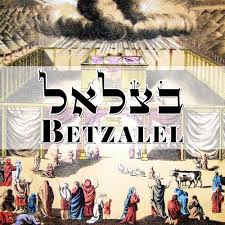
That said, his appointment still left us with a fascinating question. What exactly was special about Betzalel himself? How could he- young in years and without relevant experience, execute? Many Yiddin in the desert had lineage. Many had skills. Why was this young man chosen to design and oversee the Mishkan? These questions, we did not cover last week because he had just been appointed. Ober this week, in the first half of the double header (Parshas Vayakhale) he deserves and gets another shoutout from the RBSO for his exemplary work and here we go. Avada, if the RBSO decided to rave about Betzalel in this week’s parsha, zicher we should dedicate a few more lines and paragraphs to this young master craftsman. The heylige Toirah hints that Betzalel possessed something extraordinary. When Moishe first presents him to the people, he uses unusual language. Says the heylige Toirah (Shmois 35:30), azoy:
וַיֹּאמֶר מֹשֶׁה אֶל־בְּנֵי יִשְׂרָאֵל רְאוּ קָרָא ה׳ בְּשֵׁם בְּצַלְאֵל בֶּן־אוּרִי בֶּן־חוּר לְמַטֵּה יְהוּדָה
“Moishe said to the children of Israel: See, Hashem has called by name Betzalel son of Uri son of Chur of the tribe of Yehudah.”
This is the moment when Moishe publicly announces Betzalel’s appointment to the nation. But didn’t we meet him last week? We did! Is this another repetition? Yes and no! This is actually the second time the heylige Toirah shares this information and taka the first time was in last week’s parsha when the RBSO told it to Moishe privately. Let’s check it out (Shmois 31:2):
רְאֵה קָרָאתִי בְשֵׁם בְּצַלְאֵל בֶּן־אוּרִי בֶּן־חוּר
“See, I have called by name Betzalel son of Uri son of Chur.”
The bottom line: yes indeed a repeat, but with some new information about him. Notice the wording:
- ראה קראתי בשם (Hashem speaking to Moishe) this week’s parsha
- ראו קרא ה׳ בשם (Moishe speaking to the people)-last week’s parsha
Moishe is essentially saying: Look — this was not my decision. The RBSO Himself chose Betzalel. This reinforces the idea that Betzalel was not simply a talented craftsman, but someone divinely appointed to build the Mishkan. Several exegetes say that Moishe was telling the people that Betzalel had special skills and that he had already proven himself. The heylige Toirah itself explicitly states his skillset in the very next posik after the introduction; let’s read the words: (Shmois 35:31–32):
וַיְמַלֵּא אֹתוֹ רוּחַ אֱלֹקִים בְּחָכְמָה בִּתְבוּנָה וּבְדַעַת וּבְכָל מְלָאכָה
וְלַחְשֹׁב מַחֲשָׁבֹת לַעֲשׂוֹת בַּזָּהָב וּבַכֶּסֶף וּבַנְּחֹשֶׁת
Translation: “He filled him with the spirit of G-d — with wisdom, with understanding, with knowledge, and with all craftsmanship. To devise designs, to work with gold, silver, and copper.” Wait! There’s more: The Toirah then continues in posik 33 with this:
וּבַחֲרֹשֶׁת אֶבֶן לְמַלֹּאת וּבַחֲרֹשֶׁת עֵץ לַעֲשׂוֹת בְּכָל מְלֶאכֶת מַחֲשָׁבֶת
Meaning he knew how to carve precious stones, work with wood, and design artistic patterns.
In fact, the heylige Toirah Lists three types of wisdom he had. The RBSO gifted him with:
| Hebrew | Meaning |
| חכמה | technical wisdom / knowledge |
| תבונה | analytical understanding |
| דעת | applied knowledge / intuition |
These three together describe complete mastery. Amazing! And the big news? What’s more givaldig is that these exact three words חכמה – תבונה- דעת, appear elsewhere only on other occasion and it’s a big one: when describing how the RBSO created the world, creation itself:
ה׳ בחכמה יסד ארץ כונן שמים בתבונה בדעתו תהומות נבקעו
(Mishlei 3:19–20)
Translation: “Hashem founded the earth with wisdom, established the heavens with understanding, and with His knowledge the depths were split open.” Meaning that through wisdom the RBSO established the earth; through understanding He set the heavens in place; and through His knowledge the depths burst forth. Notice the same three words used about Betzalel: חכמה – תבונה- דעת. Betzalel was gifted wisdom., understanding, and knowledge. Betzalel was given the same intellectual tools used in creation itself in order to build the Mishkan. That connection is why Chazal say Betzalel understood something about the structure of creation.

And we close with this: Perhaps now we can now chap and better appreciate why the heylige Toirah chose to repeat so much of the Mishkan narrative. It wasn’t stam azoy repetition. It was emphasis. The same nation that only weeks earlier had rushed to build the eygel without instruction was now capable of doing something very different: listening and following instructions. Every vessel, every garment, every beam and curtain was fashioned “כאשר צוה ה׳ את משה.” The heylige Toirah repeats the phrase again and again because this was the big news of the day. The Yiddin had learned how to serve the RBSO not through improvisation but through obedience.
And who was chosen to lead this transformation? Not a prince, not a prophet, not a warrior. A young craftsman named Betzalel ben Uri ben Chur. A boy barely thirteen years old who possessed wisdom, understanding, and knowledge — the very same intellectual tools the heylige Novee uses to describe the creation of the world itself. The RBSO built the universe with chochmah, tevunah, and daas, and Betzalel was given those same tools to build the Mishkan. Mamish gishmak. And if this is mamish pshat, the Mishkan wasn’t just a building in the desert. It was a miniature recreation of creation itself. The Mishkan, it seems, was a miniature recreation of the universe. Creation built a world for man, while the Mishkan allowed man to build a home for the Divine Presence. And now you know.

Choidesh Nissan coming this week and Pesach mamish around the corner; get ready!
Chazak, chazak, Vi’nischazake!
A gittin Shabbis!
The Heylige Oisvorfer Ruv
Yitz Grossman
