Raboyseyee and Ladies,
Careful Who You Marry & Sanctioned Intermarriage:
The title alone is mamish scandalous and we will zicher get to it soon -not to worry- but let’s begin here. Everyone who went to yeshiva knows that there is something eerie about Parshas Tetzaveh. It is the only parsha from the beginning of Sefer Shmois -Moishe birth- until Moishe’s death where his name does not appear even once. Not in passing. Not in a footnote. Not even in small print. Gornisht! On the other hand, why should it be included in a parsha that’s all about the Kohen Gadol, his sacred garments, the golden crown, the jeweled breastplate, and the inauguration of the priesthood. It’s all about Aharoin and his sons. On the other hand, the parsha that describes the highest spiritual office in Jewish life is the one where Moishe vanishes? That would be odd enough except for one small Midrashic detail: Moishe was originally supposed to be the Kohen Godol. He was? Says who? Mamish azoy? Was he fired? Demoted? Promoted? What went down? Many have pontificated over this oddity and have proffered various opinions but that is not the topic of the week. So happens that the Ois is in flight and the farkakte WIFI is not working. Settle in for a longer than usual review that will zicher entertain you.
Our Sages of the heylige Gemora and medrish tell us that in the beginning, the plan was simple: Moishe would be the Kohen, Aharoin would be the Levi. Moishe would lead. Moishe would serve and Moishe would wear the special priestly garments, a complete designed by the RBSO himself custom-made ensemble. Fartig and case closed; top honors all divvied up peacefully. But then came the burning bush. We all know the power of the bush, if you chap. The RBSO said: “Go redeem My people” but Moishe answered with some chutzpah; like a shtikel weisenheimer: “Who am I?” “They won’t believe me.” “I am not a man of words.” And finally — “Send someone else!” And taka, he did say all the Ois just quoted. What? The RBSO presents Himself to you in the form of a burning bush and you say what? Of course, the RBSO was upset and so the heylige Toirah tells us be’feirush (explicitly): “Vayichar af Hashem b’Moishe.” The RBSO’s anger burned against Moishe. Chazal understood that this anger had practical consequences. Until that moment, Moishe was designated for kehuna. After that moment, the kehuna was transferred to Aharoin. Permanently, generationally, and with hereditary privileges; irrevocable. The bottom line: History turned on one sentence.
One question we have touched on in the past but will expand upon greatly this year (no, this is not a repeat, all brand new material) is this: Was Moishe ever actually a Kohen? And the answer to that question is that it depends. It depends on which of the three understandings talk to you. That’s right, there are three different approaches; let’s check them out. The big news in town is that none suggest that he was but a Yisroel, a good poshite Yid as are most.
In one view, He was supposed to be the kohen but lost it before it began. A second view suggests that he did in fact serve as a kohen –maybe even the big kohen (Kohen Godol) – for the seven days of miluim. Miluim were the seven days of consecration (the soft opening) of the Mishkan. He offered korbonis, anointed Aharoin, and functioned as Kohen during inauguration — temporarily. Third view: A minority opinion holds Moishe retained a personal kehuna for forty years in the desert — but it was not hereditary. Let us explore each idea further. Says the medrish (Vayikro Rabbah 11) that Moishe served as a high priest for the entire wilderness period:
ויקרא רבה (מרגליות) פרשת שמיני פרשה יא ר’ יודן בש’ ר’ יוסי בר’ יהודה ור’ ברכיה בש’ ר’ יהושע בן קרחה כל ארבעים שנה שהיו ישראל במדבר לא נמנע משה מלשמש בכהונה גדולה…
“R. Yuden in the name of Rabbi Yossi son of R. Yehudah, and R. Berechiah in the name of R. Yehoshua ben Korha: “All forty years that the Israelites were in the wilderness, Moishe did not stop serving as the high priest…” he not just served, he was the kohen Godol.”
Nice! Ober, as mentioned earlier, other Sages have him serving as priest only during the seven days of consecration, but debate whether even then, he wore the high priest’s clothing or only regular white clothing:
אמ[ר] ר’ אלעזר בר’ יוסי: פשוט הוא לן שבחלוק לבן שימש משה כל שבעה…
Rabbi Eleazar son of Yossi said, “It is clear that Moishe served [as high priest] in a white robe during the Seven Days of Inauguration.”
ר’ תנחום בר’ יודן תני כן כל שבעת ימי המילואים היה משה משתמש בכהונה גדולה ולא שרת שכינה עליו.
Rabbi Tancum son of R. Yudan taught: “Moishe served in the office of the high priesthood throughout the Seven Days of Inauguration, but the divine presence did not come down upon him.” The heylige Gemora (Z’vochim 102) tells us that Moishe served for a week as a kohen:
בבלי זבחים קב. וחכמים אומרים: לא נתכהן משה אלא שבעת ימי המלואים בלבד.
The Sages say: Moishe only did priestly duty during the Seven Days of Inauguration.
Moishe, however, was not permitted to maintain this status, but had to transfer it to his brother Aharoin. Why? Because he sinned -as mentioned on page one- for first turning down the RBSO’s command to go to Paroy and demand that he free the Yiddin, which angered the LORD:
שמות ד:יג וַיֹּאמֶר בִּי אֲדֹנָי שְׁלַח נָא בְּיַד תִּשְׁלָח. ד:יד וַיִּחַר אַף יְ־הוָה בְּמֹשֶׁה וַיֹּאמֶר הֲלֹא אַהֲרֹן אָחִיךָ הַלֵּוִי יָדַעְתִּי כִּי דַבֵּר יְדַבֵּר הוּא….
But [Moishe] said, “Please, O Lord, send through whomever you will send (in plain English: make someone else Your agent).” The LORD became angry with Moishe, and said, “There is your brother Aharoin the Levite. He, I know, speaks readily….” Noting that Aharoin is appointed spokesman here as a result of G-d’s anger, the heylige Gemora in Z’vochim (102a) draws a connection:
בבלי זבחים [כת”י וטיקן 120–121] קב. “ויחר אף יי במשה” (שמות ד:יד)—ר’ יהושע בן קרחה אומ[ר]: כל חרון אף שבתורה נאמ[ר] בו רושם וזה לא נאמ[ר] בו רושם.
“The LORD became angry with Moishe” (Shmois 4:14): Rabbi Yehoshua ben Korcha said: “With every mention of [God’s] fierce anger in the heylige Toirah there is the mention of a lasting effect, but here there is no mention of a lasting effect.”
א[מר] ר שמע[ון] בן יוחי: אף זה נאמ[ר] בו רושם, שנ[אמר] (שמות ד:יד): ‘הלא אהרן אחיך הלוי’, והלא כהן הוא? אלא אני אמרתי אתה כהן [והוא] לוי, ועכשיו הוא כהן ואתה לוי.”
- Shimon ben Yochai said: “Here too there is mention of a lasting effect. It says (Shmois 4:14): ‘Here is your brother Aharoin the Levite.” Wasn’t he a priest? Rather [what the RBSO was saying was): ‘I had said originally that you(Moishe) would be a priest and he (Aharoin) would be a Levite. Now, he will be a priest and you will be a Levite!’”
In all three scenarios above, Moishe served as either a Kohen or the koihen Godol and the shaylo is this: If he taka was the kohen for seven days or forty years, who were his Kohanim? Who assisted him? His kids? There is mamish no mention of Moishe’s kids assisting. What we do know is that Aharoin’s sons became Kohanim. Their sons became Kohanim and their descendants remain Kohanim until today. Some say it’s in their DNA. We also know that Moishe’s sons — Gershom and Eliezer — did not become Kohanim; they were Leviyim. And hear this though it’s quite uncomfortable to read: Moishe’s grandson, Yoinoson ben Gershom, appears in the Novee (Shoftim) serving as a priest in a private idol shrine. The grandson of Moishe Rabbaynu — associated with avoida zoro? Say it’s not so but it was! OMG and blow me down with a feather. This must be an error, yes? No! and let’s find out how the heylige Gemora and others dealt with this embarrassing episode. In the heylige Novee (Shoftim 18:30) we read this: “וַיָּקִימוּ לָהֶם בְּנֵי דָן אֶת הַפָּסֶל…
וִיהוֹנָתָן בֶּן גֵּרְשֹׁם בֶּן מְנַשֶּׁה הוּא וּבָנָיו הָיוּ כֹהֲנִים לְשֵׁבֶט הַדָּנִי…”
“And Yoinoson son of Gershom son of Menashe — he and his sons were priests to the tribe of Dan…” Now here’s the bombshell. The word “Menashe” in the Novee is written in a very strange way: The letter nun is written smaller and suspended. Smaller and suspended? What could that mean? Of course, our sages- brilliant people they were- chapped this oddity and came up with this pshat; it’s mamish so gishmak. Zicher they would’ve made great trial lawyers, all of them. The heylige Gemora (Buba Basra 109b) states clearly that the suspended nun was inserted to avoid disgrace. The original reading was:
בן גרשום בן משה –“Son of Gershom son of Moishe.”
But to avoid publicly shaming Moishe Rabbaynu for having such a wayward OTD (off the derech) grandson, the text was written as “Menashe,” with a suspended nun — so it could read both ways. Remove the nun and it spells Moishe. And the heylige Gemora says explicitly: He was Moishe’s grandson. The bottom line: According to Chazal, this Yoinoson was the grandson of Moishe. Oy vey. Ober, how could Moishe’s grandson do this? Enter our good sages to the rescue who tell us this: He was poor and took the position for parnoso (to earn a livelihood). I came across another medrish which suggests that he misunderstood Moishe’s teaching that one should take work even if it seems beneath one’s dignity and the words “avodah zoro” could metaphorically be interpreted as strange work — and he tragically misapplied it literally. Cute and so very clever. Of course, there are also opinions that this grandson eventually repented. Ober, maybe we’re mistaken, maybe it was a different person with a similar name? Ober, sadly we know this because the posik names him: Yoinoson son of Gershom and the only Gershom prominently known in Tanach at that time as a Levite is Moishe’s son. This is not speculation. It is an explicit Chazal identification. Having said all that, we can chap the dramatic contrast between Aharoin’s descendants who become eternal Kohanim and Moishe’s grandson who became a priest to an idol. Was having this Yoinoson in his lineage Moishe’s reward for serving the RBSO with such devotion? Does it pay to be tzadik? The bottom line: Kids choose their own path whether we like it or not. Meanwhile, Aharoin’s descendants got to light the Menorah in the Beis Hamikdash. It’s taka emes that two of them died by fire but that for another parsha review. The contrast is painful. The bottom line: one must be very careful when encountering a burning bush. It seemingly burned Moishe’s career as a kohen! Soon we shall tie all this together.
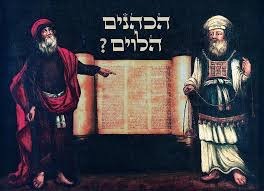
And now the question of the week: Might the wives of both Moishe and Aharoin have played a role in what positions their husbands ended up with? What is the Ois suggesting? Does the Toirah even mention this subject? Or this possibility? It does not! Zero! What the heylige Toirah does talk about, or at least mentions, is whom each brother married. And this raboyseyee is where the medrish and specifically the Ibn Ezra went to work. He saw an opening when the Toirah mentioned the lineage of each spouse and ran with a conspiracy as large as Russia-gate. As an aside, if ever you find yourself speaking at a sheva brochis and need a serious d’var Torah, this one is a killer mamish.

Let’s say hello to the Ibn Ezra who compares the marriages of the two brothers. Aharoin married Elisheva bas Aminodov, sister of Nachshoin ben Aminodov — nosi (leader) of Yehudah, aristocracy of Israel, mamish. That yichus included royal pedigree, leadership lineage, and deep tribal rootedness. The name Nachsoin ben Aminodov should still be fresh on your minds because the heylige Ois wrote about him just a few weeks ago. According to one view of the heylige Gemora, he was mamish a leader and a hero. On the other hand, Moishe married Tzipporah, daughter of Yisroy, a Midianite priest, an idol worshipper. A shiksa mamish! (Not for now but the RBSO does have a sense of humor.) Tzipoirah may have been a convert, though this -if emes- is not mentioned in the Heyilge Toirah. She may have been righteous, this too not mentioned, but what is mentioned is that she was from outside the tribal structure of Israel. As mentioned, a shiksa. So what you ask? Settle in and here we go…
The Ibn Ezra suggests -as you will read below, that kehuna (priesthood) required strong tribal rootedness and familial structure within Klal Yisrael. Aharoin’s household had that, Moishe’s did not. Wow! And if that’s emes, Moishe may have lost hereditary priesthood, at least in part, because of who he married? Say it’s not so please but was that the case? Shoin, we all know that history sometimes turns on theology, sometimes on politics. And sometimes on shidduchim? Say it’s not so! And? We shall address this below but first a few words about this exegete. The Ibn Ezra (Rabbi Avraham ben Meir ibn Ezra) a 12th century rabbi, was one of the great Rishonim — medieval Torah scholars — and one of the most influential biblical commentators in Jewish history. He was deeply committed to pshat (plain meaning of the text), grammar & linguistic precision, and rational analysis. The Ibn Ezra was not a midrashic storyteller. When he hints that Aharoin’s marriage into aristocracy matters, Moishe’s marriage into Midian matters, and that yichus (pedigree) plays a role in kehuna, he is not doing homiletics. He is doing textual analysis. It’s a medieval master of pshat quietly suggesting that family structure and tribal rootedness may have influenced who received the hereditary priesthood. Coming from the rationalist Ibn Ezra, that’s shtark, good stuff, and what he has to say about why Moishe was demoted from the priesthood and moved to Levi is mamish shreklich. Let’s read some of it. It’s taka emes that Moishe served as a temporary kohen. His proof? The posik in our parsha where the Heylige Toirah introduces the Aharoinide priesthood:
שמות כח:א וְאַתָּה הַקְרֵב אֵלֶיךָ אֶת אַהֲרֹן אָחִיךָ וְאֶת בָּנָיו אִתּוֹ מִתּוֹךְ בְּנֵי יִשְׂרָאֵל לְכַהֲנוֹ לִי אַהֲרֹן נָדָב וַאֲבִיהוּא אֶלְעָזָר וְאִיתָמָר בְּנֵי אַהֲרֹן.
You [Moishe] shall bring forward to you your brother Aharoin, with his sons, from among the Israelites, to serve Me as priests: Aharoin, Nodov and Avihu, Eleazar and Esomor, the sons of Aharoin. Why was Moishe commanded to bring Ahroin forward? It’s phrased as הַקְרֵב אֵלֶיךָ “bring them forward to you” because Moishe was, at the beginning, the priest of priests, therefore, the text states “You shall bring forward to you… Nice, and there is more: Ibn Ezra also believes that not just was Moishe a kohen, he was the big kahuna. The kohen godol!
אבן עזרא שמות [ארוך] כח:א בעבור היות משה כהן הכהנים בתחלה על כן טעם הקרב אליך
So far so good but then he takes a dark turn and blames Moishe’s loss of the priesthood on Tzipoirah, the daughter of Yisroy the Midianite Priest who may, or may not, have eventually converted. And his proof? Let’s check it out, it’s mamish kiday (worthwhile). He builds his case methodically and hearkens back to Aharoin’s choice for a wife.
שמות ו:כג וַיִּקַּח אַהֲרֹן אֶת אֱלִישֶׁבַע בַּת עַמִּינָדָב אֲחוֹת נַחְשׁוֹן לוֹ לְאִשָּׁה וַתֵּלֶד לוֹ אֶת נָדָב וְאֶת אֲבִיהוּא אֶת אֶלְעָזָר וְאֶת אִיתָמָר.
Aharoin took as wife Elishsheva, daughter of Aminodov and sister of Nachshoin, and she bore him Nodov and Avihu, Elozor and Esomor. Ibn Ezra wonders why the heylige Toirah mentioned who his wife’s brother was and explains why the apparently irrelevant information about Aharoin’s wife, the mother of the future high priest Elozor, and her brother Nachshoin, were included. He concludes that [The text] mentions the wife of Aharoin because of the honor of Elozor, and it mentions that she was the sister of Nachshoin because of the secret of the Priesthood. What secret is that?
ו:כג הזכיר אשת אהרן בעבור כבוד אלעזר והזכיר אחות נחשון בעבור סוד[הכהונה.
Elsewhere in the heylige Toirah, as we mentioned a few weeks back in Parshas Beshalach, we learned that Nachshoin, son of Aminnodov was the leader (nosi) of the tribe of Yehudah. While the Toirah offers no further description of him, the heylige Gemora in a debate about who entered the Sea of Reeds first, depicts his piety. According to Rabbi Meir, each tribe fought for the privilege of who would enter the water first, and the tribe of Benyamin won out. To this, Rabbi Yehudah responds with a different version of what took place:
בבלי סוטה [גניזה] לז. ר’ יהודה או[מר]: לא כך היה מעשה, אלא שקפץ נחשון בן עמינדב וירד תחלה לים,[שנ[אמר] (הושע יב:א): “סְבָבֻנִי בְכַחַשׁ אֶפְרַיִם [וּבְמִרְמָה בֵּית יִשְׂרָאֵל וִיהוּדָה עֹד רָד עִם אֵל וְעִם קְדוֹשִׁים נֶאֱמָן]”.
Rabbi Yehudah says: That is not what happened, rather Nachshoin jumped in and fell first into the sea, as it says (Hos 12:1): “Ephraim surrounds Me with deceit, [the House of Israel with guile, but Yehuda stands firm with G-d and is faithful to the Holy One].” And here is the main point: The heylige Gemora (Buba Basra 110) claims that the reference to Nachshoin in the genealogy highlights the importance of choosing a woman from a good family:
בבלי בבא בתרא קי. מה תלמוד לומר אחות נחשון? מכאן, שהנושא אשה צריך שיבדוק באחיה. תנא: רוב בנים דומין לאחי האם.
What does the verse teach when it states: “The sister of Nachshoin”? From here we learn that one who marries a woman needs to examine her brothers. It was taught: Most sons resemble their mothers’ brothers. Ibn Ezra does not explicitly refer to the midrash of Nachshoin jumping into the sea, but he seems to know it, since in the continuation of his gloss on the choice of Aharoin (quoted above), he refers to the honor of Nachshoin’s family:
אבן עזרא שמות [ארוך] כח:א וכבר רמזתי לך למה נבחר אהרן להקדישו לשם בעבור כבוד משפחת נחשון. שיהיו הכהנים מכפרים על בני ישראל.
I have already provided a hint as to why Aharoin was chosen to be sanctified to the LORD [to serve as high priest], namely because of the honor of the family of Nachshoin, so that they would serve as the priests who would atone on behalf of Israel. In praising Nachshoin’s family, ibn Ezra is almost certainly also referring to the fact that according to the book of Rus (Ruth), Aminodov was the ancestor of King David:
רות ד:כ וְעַמִּינָדָב הוֹלִיד אֶת נַחְשׁוֹן וְנַחְשׁוֹן הוֹלִיד אֶת שַׂלְמָה. ד:כא וְשַׂלְמוֹן הוֹלִיד אֶת בֹּעַז וּבֹעַז הוֹלִיד אֶת עוֹבֵד. ד:כב וְעֹבֵד הוֹלִיד אֶת יִשָׁי וְיִשַׁי הוֹלִיד אֶת דָּוִד.
Aminodov begot Nachshoin, Nachshoin begot Salma, 4:21 Salmon begot Boaz, Boaz begot Obed, 4:22 Obed begot Jesse, and Jesse begot David.
If marrying into Nachshoin’s family made Aharoin an ideal candidate for high priest, Ibn Ezra continues with the inverse point, that Moishe married Zipporah, a Midianite woman. Even though the circumstances were beyond his control -let us recall that he killed a Mitzri and was on the run because Paroy wanted him dead- this intermarriage disqualified Moishe from founding a priestly lineage: “And one should not speak [negatively] about Moishe our master, for he was fleeing, and who could have given him a Hebrew woman?” Nebech!
אבן עזרא שמות [ארוך] כח:א ואין לדבר על משה אדוננו כי בורח היה ומי יתן לו עברית?
While Moishe cannot be blamed for intermarrying, his children would not be the product of a family like that of Elisheva, Aharoin’s wife. The bottom line: Aharoin’s resume which seemingly included his wife and her family, sort of like a full house, beat out Moishe’s cards which included his shiksa wife and pagan idol worshiping father-in-law. Nu, if you were the RBSO for a day, whom would you pick to be the high priest? Case closed!
But the Ibn Ezra is not done; he has more to say on Aharoin’s selection over Moishe. He explains that Moishe was much too busy to be a priest himself: “ And furthermore, he was burdened with all [the matters of the] Israelites, to teach them the commandments and to judge all difficult cases.
אבן עזרא שמות [ארוך] כח:א ועוד כי טורח כל ישראל על משה ללמדם המצות ולדון כל דבר קשה
The bottom line: What we have here is a shtikel machloikes on why Moishe lost the kahuna to his older brother Aharoin. On the one hand, our Sages suggest the lost it (assuming he had it) because he sinned when he answered the RBSO with some moxie. Ober, the Ibn Ezra says he lost it on account of marrying the shiksa Tzipoirah and this intermarriage- though avada not his fault, of course not- disqualified Moishe’s descendants from holding a hereditary priesthood.

And the bottom lines? Did Moishe lose the kahuna because he was a wisenheimer to the RBSO? Or, did he lose the kahuna because he married a shiksa while his brother married the sister of Nachsoin? Ver veyst? Ober says the Ois azoy: both Moishe and Ahroin did very well for themselves walking away with top honors. Aharoin received the title and office of the big Kohen, the continuity, garments, and the pageantry. Moishe received the heylige Toirah. And Moishe, despite his shiksa wife- or-perhaps davka because of her- did get to speak to the RBSO face to face and talk with him regularly. The Final Irony: Aharoin received the uniform, Moishe received eternity. We do not say Toiras Aharoin, we do say Toiras Moishe. Mamish a masterpiece!
A gittin Shabbis-
The Heylige Oisvorfer Ruv
Yitz Grossman
