Miketz – Shabbis Chanukah 2025: A Holiday Missing Its Heroes; Chanukah Without the Maccabees
by devadmin | December 18, 2025 9:14 pm
Raboyseyee and Ladies,
A Holiday Missing Its Heroes; Chanukah Without the Maccabees:
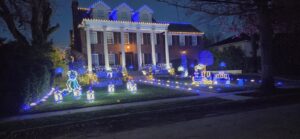
When it comes to the festival of lights and פִּרְסוּמֵי נִיסָא – meaning publicizing the miracle of Chanukah, no one in the Five Towns does it better than Yossi and Bonnie Fein. It you live locally and even if not, it’s well worth your time to drive down Muriel Avenue after dark to see this great display; this year they went bigger and better; Yashar koach for your efforts.
Let’s begin here: When I was first introduced to the word apocryphal, it was not a neutral academic term. It was a polite way of saying nisht emes -not true- exaggerated, or — if we were being honest, basically nonsense. If something was apocryphal, it belonged somewhere between a Greek myth and a bubbe‑myseh. And yet, here we are, stuck with this uncomfortable fact: the festival of Chanukah itself lives in books that were never canonized. Instead, it lives in the Apocrypha. The Maccabees are not in Tanach, the war against the Greeks is not in the Gemora; let’s have a few latkes. And still, the holiday is very real, very binding, and very Jewish. Ok, that was a mouthful and we have lots to unpack; halt kup (pay attention) because the heylige Ois will explain all below.
Happy Chanukah to all and a very joyous Sukkis, Chag Somayach! Lest you think the heylige Ois lost his mind while sitting on the plane this past Monday, which -after being diverted to Detroit- landed at JFK at 10:07 PM but, due to snow earlier, staffing shortages, and other events, the bridge wasn’t extended and the door only opened at 11:45 PM (luggage only at 12:30 AM), you wouldn’t be very wrong. Ober that said, believe it or not, and though not taught in yeshiva, there is mamish a real shtarke (strong) connection between the holidays of Chanukah and Sukkis. A big one! How can they be connected when the Yom Tov of Sukkis is mandated and described in the heylige Toirah itself, while Chanukah was manmade (actually declared by Yehudah the Macabee) some 1174 years later? What’s pshat here? We shall explore that soon, ober first this.
This year, we will skip over Parshas Miketz -previously covered for the past fifteen years. For the purists among my many readers, and if you want to know about Paroy’s dreams which led to Yoisef being released from prison, his rise to power -viceroy of Egypt, and a few other tales about the brothers, you will find all these well covered topics in the archives at www.Oisvorfer.com. Instead, this year we will discuss a major controversy regarding the origins of Chanukah, beginning with this shocking fact: If you learned about Chanukah only from the heylige Gemora, you would barely know that the Maccabees existed. More correctly stated: you would not know at all! Who were they? More on them below, ober, let’s first check out the heylige Gemora Shabbos (21b) which introduces the festival of Chanukah with this question: מאי חנוכה? What is Chanukah?
And the surprising answers not given but inferred are these: Chanukah was not a military victory, was not about Jewish sovereignty, did not entail guerrilla warfare, and there was no such thing as Chashmanoim heroism. Instead, what the heylige Gemora does tell is this: it’s about נס פך השמן — the miracle of the oil. We shall soon explore this factoid ober know this: This replacement of the war with a story about oil was not accidental. Farkert! It was a deliberate theological editorial decision, and the question -one of many- is this: Why did Chazal (our sages) of the heylige Gemora shift the focus away from the great accomplishments of the Maccabees? Were they not war heroes? Was the entire storyline but fictional? Was there no war between the Maccabees and the Greeks? And the reality is this: Chazal took a bloody revolution, hid the bodies, and lit a candle instead. Why?
That asked, before we accuse our holy sages of historical vandalism, a brief public service announcement for readers who did not major in Second Temple Judea is in order. The Maccabees were not a band, well not until recent years when one with a similar name was formed over at Yeshiva University. They were not a slogan. They were a family. They came from Modi’in, a small-town northwest of Jerusalem -in more recent years made famous again by Reb Shlomo Carlebach. They were kohanim — priests — from the family later known as the Hasmoneans (Chashmanoim). Their patriarch, Mattisyohu ben Yoichonon, was a local Koihen, not a general, not a politician, and certainly not auditioning to found a dynasty.
The villain of the story was not “Greek culture” in the abstract, but a very specific regime: the Seleucid Empire, under Antiochus IV Epiphanes. Unlike earlier periods of cultural exchange, this was not optional Hellenization. It was enforced. Toirah observance was criminalized. Circumcision was banned. Shabbos became illegal. The Beis Hamikdash was turned into a pagan shrine. A pig was sacrificed on the altar — an act less about theology and more about humiliation. This was not assimilation. This was coercion. So happens that many Yiddin were excited about Hellenism and eager to assimilate but that for another time.
The revolt began not with an army but with a street incident: Mattisyohu killed a fellow Jew who stepped forward to offer a pagan sacrifice, along with the Seleucid official enforcing it. He then fled to the hills with his sons. This is how revolutions usually begin — not with ideology, but with a line that could no longer be crossed. After Mattisyohu’s death, leadership passed to his son Yehudah, nicknamed HaMaccabi — possibly from maqqaba, a hammer, or from the acronym מי כמוך באלים ה׳. Either way, subtlety was not the point. Under Yehudah and his brothers, a guerrilla revolt turned into a national uprising. Against all odds, they defeated a professional imperial army, reclaimed Yerusholayim, and rededicated the Beis Hamikdash. Happy Chanukah! We won; let’s party! Only later — much later — did this priestly family morph into a ruling dynasty, crown itself kings, and begin the slow slide from miracle to monarchy. Let’s keep this arc in mind. It explains everything that follows. Veyter.
And how does the heylige Gemora cover this part of history? It does not! Instead, it discusses oil. Not war. Not revolt. Not courage. Not Mattisyohu screaming “מי לה’ אלי!” and skewering a Hellenist Jew in Modi’in. instead, it’s oil, a jug, a seal, and one day’s supply. Eight days of combustion. That’s it. No battles. No elephants. No dead Greeks. No heroic last stands. The Maccabees don’t even get a walk-on role. They are, at best, extras who didn’t make the final cut. This was not forgetfulness. Our sages of the heylige Gemora did not “misplace” the war. They buried it; gently, respectfully, and very, very deliberately. But why?
To be fair, the heylige Gemora does epes reference something about the Greeks but not in relation to Chanukah. There are two allusions, oblique references and here they are: The heylige Gemora (Taanis 29a and Megillah 7b) discusses general themes of survival against foreign oppression, sometimes using the example of “Yovon” (Greece) and miracles. Neither explicitly reference the Maccabees; they echo the historical context. And over in the medrish (Yalkut Shimoni on Esther, or Pesikta de-Rav Kahana on miracles) one can find some language regarding Jewish deliverance under foreign kings and comparing them to other historical events, hinting at Maccabean-type resistance.
Oib azoy, if that’s case, how do we in fact know about the war and the Maccabees? Where is the full story preserved? And the answer is azoy: all this history is recorded in the books of Maccabees I and II. What books are these? Is Maccabees a Sefer, a Hebrew book? So happens that it is, more on that below as well. Who wrote it? Did we ever study these books in yeshiva? Not! Ever hear about these books? Also not! Ober know this: These books, Maccabees I and II, also known as Sefer Maccabim I and Sefer Maccabim II, are in fact ancient historical works written in the Hellenistic period preserving the Hasmonean revolt narrative. They are the historical and literary record, the source of the narrative we just sketched.
The Maccabees wrote their own books. So happens that the Ois has read both of them. Maccabees I is a straightforward military chronicle. Battles, victories, politics. Very impressive and very Tanach-adjacent. Maccabees II is more theological. Martyrdom. Resurrection. Chana and her seven sons, who somehow survived the editorial purge and made it into Midrash class. The bottom line: The Hasmoneans (the Maccabean leadership) declared Chanukah to be celebrated: not the Gemora and not later rabbis. 1 Maccabees 4:59 states explicitly that Yehudah the Maccabee and his brothers, together with the entire assembly of Israel, established that the days of the dedication of the altar should be observed every year for eight days. In other words: The people who won the war rededicated the Beis Hamikdash, and instituted the holiday themselves. This places the declaration of Chanukah in the late 2nd century BCE (around 138 BCE). And it stuck! And let’s absorb this: the Gemora was redacted much later in the 5th–6th century CE (roughly 400s–500s CE). In plain English, Chanukah was already a six-hundred-year-old holiday by the time the Gemora finally asked, “Mai Chanukah?” By the time the Gemora explained Chanukah, the candles were already six centuries old.
More bottom lines: Chanukah is a post-biblical holiday that was declared by political–religious leaders, not prophets, and was later ratified by rabbinic tradition, but not created by it. And so, six hundred years later, the heylige Gemora accepted the holiday, legislated its mitzvis (candles, placement, timing), and reframed its meaning away from the founders. Wow! And yet, it lives in the Apocrypha?! What’s pshat?
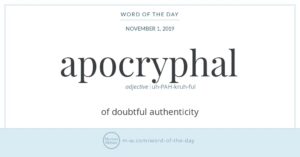
Ober doesn’t the word apocryphal mean mamish not emes, a buba myseh (real bs)? What’s pshat here? And the bottom line is this: apocryphal is the great word that got ruined. Somewhere along the way, apocryphal became a smear word. If it wasn’t canon, it must be suspect. If it wasn’t Toirah, it must be false. Ober raboyseyee, that is not rabbinic thinking. That is modern insecurity. The Apocrypha is not the trash bin of lies. It is the archive of memory — texts that are known, preserved, respected, and yet, deliberately not made holy. Or, to put it in language even my younger self would understand: Apocryphal doesn’t mean ‘didn’t happen.’ In the case of Chanukah and the Maccabees, it means that it just didn’t make it into Tanach. These are books that were written after prophecy ended. They were known, read, and preserved, but were not granted Tanach-level authority. Ober, if they are historically emes and the Ois has heard many a rabbi reference them over the years, why taka weren’t Maccabees I & II included in Tanach? And the answers given raboyseyee, include these:
The Canon was already closed, too late! By the late Second Temple period, Chazal held that prophecy had ended (פסקה נבואה) and once prophecy ended, no new books got into Tanach, no matter how true, no matter how heroic, and no matter how Jewish. It so happens that Chanukah happened after that line is crossed. The bottom line: Timing matters.
But there’s more and avada we must point out the political discomfort our sages of the Gemora had with the later Chashmanoim (Hasmoneans). And this raboyseyee, is the elephant in the Beis Midrash. The Chashmanoim were Kohanim who later took kingship, eventually became corrupt, Hellenized, and violent, and gave us Herod as a sequel nobody asked for. The bottom line: Canonizing a book that praises the Hasmonean dynasty and treats their rule as divinely ideal would have been endorsing a political-theological mistake forever. Instead, our sages said this: We’ll remember the miracle but not the regime. We will keep the holiday but change the narrative.
So how did these books survive at all? They survived because the Christians canonized them. The books were translated into Greek (Septuagint). Early Christians preserved them as part of their Old Testament tradition. Jews, meanwhile, quietly stopped copying them — not out of denial, but out of theological restraint. The books were not canonized, meaning they did not make the cut to be included in what we call Tanach (for Torah, Nevi’im and K’suvim) which consists of a total for 24 books including the heylige Toirah itself, the books of the prophets and writings of the selected few. Specifically not included were Maccabees I and II which recount battles, decrees, and the reclaiming of the Beis Hamikdash (Temple), the very content Chazal avoids celebrating in the Gemora. Well blow me down!
The bottom line: The Gemora focused on oil, and the books exist without being sacred. Judaism remembered Chanukah, Christianity preserved the books, and the Gemora said almost nothing. Are they “true?” Yes — in the historical sense. Chazal never said otherwise. In fact, they said nothing at all about the war and the miraculous victory.” The bottom line: The Apocrypha is where Jewish history goes when it’s too true to deny, but too dangerous to canonize. One more point: Maccabees I and II didn’t miss the cut because they lied. They missed the cut because they told the truth — about power. Or sages were looking for more inspirational content, books written thanking the RBSO for miracles; not warriors who went out to battle.
Shoin, earlier I wrote happy Chanukkah and Happy Sukkis and mentioned that they were connected, ober how? Let’s go to the source (Maccabees II 10:6-7) where we read this: The celebration of the rededication of the Temple lasted eight days because the Jews had been unable to observe Sukkis at the proper time during the war. According to Maccabees II, Chanukah is eight days because… wait for it… they missed Sukkis. That’s right. Chanukah is Sukkis’s rain-check. They celebrate with branches, songs, and joy because during the war they couldn’t do Sukkis properly. So they made it up later. And this raboyseyee, is the primary historical source connecting Chanukah and Sukkis: They celebrated Chanukah Eight days with praise and Hallel-like songs. So happens that Sukkis and Chanukah -one mandated biblically and one manmade- are the only two holidays when we Yiddin recite the full Hallel for all eight days. Our sages of the heylige Gemora later preserved the eight-day structure, but stripped the political explanation. Veyter.
All was quiet for a while, for a few hundred years. The heylige Gemora successfully did away with the entire war effort and had erased the good work of the Chashmanoim and the Maccabees. And so it was until the 8th century when someone put pen to paper and wrote what we know as Tractate Soferim, and guess what? It contains the earliest liturgical form of Al HaNissim, and just like that, the Maccabees were back. Ober what the hec is Tractate Soferim? Is it part of the Gemora? That cannot be because the heylige Gemora was redacted in the 5th and 6th centuries (Bavli and Yirushalmi) and this tractate appeared only in the 8th. Oib azoy, why is it called a tractate as if it were part of the Gemora?
And the answer is azoy: Tractate Soferim is not part of the Talmud, even though it’s called a “tractate.” Soferim belongs to a body of works called מסכתות קטנות (Minor Tractates). These minor tractates and are not included in Mishneh, are not included in either Talmud (Bavli or Yerushalmi). They are all post-Talmudic and generally dated between the 7th–9th centuries CE. They were later appended to the end of the Talmud in manuscripts and early printings, which is why they look talmudic and are called “tractates.”
Ober the question stands: Why are they referred to as “tractates” if it’s not Talmud? And the answer is azoy: Because they were written in rabbinic Hebrew/Aramaic, are organized into chapters and halachic units, address normative ritual practices, and were transmitted in rabbinic academies. Historically and canonically, they are not part of the Mishneh, the Gemora, and the sealed Talmudic corpus. That said, Tractate Soferim (ch. 20) preserves the early fixed liturgical text of the Al Hansisim, and provides evidence that the prayer was already standardized by the Geonic period.
Which means what? Sometime after Chanukah was established by the Maccabees, the heylige Gemora successfully skipped over them in its folios; Tractate Soferim brought them back. What a comeback! Or, perhaps we can kler that Chanukah’s original narrative is deliberately thin in the Gemora, and its liturgy matures later when post-Talmudic texts fill in what the Bavli left deliberately sparse.
So what exactly is Al HaNissim (“על הנסים”)? It’s a liturgical insertion of thanksgiving added to The Amidah and into benching (grace after meals) and is recited on Chanukah and Purim. Its function is very specific: To publicly thank the RBSO for historical salvation. Not to petition, not to praise abstractly, but to narrate divine intervention in Jewish history. Let’s read it in English but before we do, know this: there is no mention whatsoever of the oil miracle. Is this a shot across the bow of the Gemora? Tit for tat? The entire prayer is about national, historical salvation. The enemy is also theological – “להשכיחם תורתך” – Chanukah is framed as a war over the heylige Toirah. The victory belongs to the RBSO, not the Hasmoneans. Humans appear only as instruments. Al HaNissim is not a prayer asking the RBSO to act — it is a prayer insisting that He already has. Let’s read it:
For the miracles, and for the redemption, and for the mighty deeds, and for the salvations, and for the wonders, and for the consolations that You performed for our ancestors in those days, at this time.
In the days of Mattityahu son of Yochanan, the High Priest, the Hasmonean, and his sons, when the wicked Greek kingdom rose up against Your people Israel to make them forget Your Torah and to cause them to stray from the statutes of Your will.
But You, in Your abundant mercy, stood by them in their time of distress; You championed their cause, You judged their judgment, You took vengeance for them; You delivered the mighty into the hands of the weak, the many into the hands of the few, the impure into the hands of the pure, the wicked into the hands of the righteous, and the wanton sinners into the hands of those engaged in Your Torah.
For Yourself You made a great and holy name in Your world, and for Your people Israel You performed a great salvation and redemption, as on this very day. Afterwards, Your children entered the inner sanctum of Your House, cleansed Your Sanctuary, purified Your Temple, lit lights in the courtyards of Your holiness, and established these eight days of Chanukah to give thanks and praise to Your great Name.
Al Hanissim clearly references the battles fought by the Maccabees against the Greek Hellenists. Ironically, the heylige Gemora could have done that a few centuries earlier instead of just making believe that the entire episode of the Chashmanoim never happened. Shoin, for reader context, let’s chazir (review) the timeline:
- The Maccabean Revolt: 167–164 BCE → 2nd century BCE
- Redaction of the heylige (Babylonian) Gemora (oil miracle focus): 5th–6th century CE → 400s–500s CE (5th–6th century)
- Earliest liturgical forms of Al HaNissim (Tractate Soferim): ~750 CE → 8th century
- Standardization in Rav Amram Gaon’s siddur: ~850 CE → 9th century
- Inclusion in Rav Sa’adiah Gaon’s siddur: ~940 CE → 10th century
The bottom line: the heylige Gamora’s theological framing came centuries after the revolt; Al Hanissim entered liturgy even later, during the Geonic period. Still inquiring minds want to know why the Gemora wanted to re-write Jewish history and minimize the herculean efforts of the Maccabees? And the answer is seemingly azoy: At some point – many years after the battle- the heroes became a problem for those charged with redacting the heylige Gemora. What kind of problem? Here is the part we usually whisper, because it ruins the children’s books. The Chashmanoim (Hasmoneans) were complicated. Yes, they saved Judaism from enforced Hellenization. Yes, they restored the Beis Hamikdash. Yes, without them we might all be named Stavros, or Aristobulus and eating pork gyros. But then… they stayed. They crowned themselves kings. Kohanim Kings, a halachic category error of the highest order. Kingship was reserved for those descending from the tribe of Yehudah; more on that in two weeks when Yaakov -on his deathbed- will dole out his final blessings to each of his lovely children. And taka says the Ramban, in his polite medieval way, azoy: nice miracle, wrong sheyvet. And it went downhill from there. Later Hasmoneans Hellenized, politicized, murdered sages, and turned religious leadership into a blood sport. What to do? This behavior put Chazal in a bind. How to create an eternal holiday around people who eventually made a mess of everything? What to do: Answer: you move the miracle away from them. You thank the RBSO, not the heroes. You sanctify oil, not dynasties. You celebrate light because light doesn’t assassinate rabbis. So when they looked at Chanukah, they flinched. A holiday about armed rebellion? Dangerous! A theology of “G-d helps those who pick up swords”? Even more dangerous. Preposterous! What to do? They performed a quiet operation. They demilitarized the miracle and Chanukah became about spiritual resistance, cultural survival, and light flickering against intellectual darkness. Just a candle stubbornly refusing to go out. As an aside and not that the heylige Ois is arguing on the heylige Gemora but it’s worth mentioning -though a few will want to chop my head off- that the miracle of the oil appears nowhere in the earliest historical accounts of Chanukah. It enters Jewish literature centuries later, in the Gemora. That doesn’t mean it happened later. It means it was remembered later — when Judaism decided what this holiday was really about.
The bottom line: the heylige Gemora gives us the halachic miracle (oil), while Maccabees give us the historical miracle (the revolt and victory). History records the war. The rabbis lit the flame. And together, they frame Chanukah as a holiday that is both spiritual and historical, but always cautious about human heroism. And now you know…
Wishing all a very happy and lit Shabbis Chanuka and Rosh Chodesh!
The Heylige Oisvorfer Ruv
Yitz Grossman
Source URL: https://oisvorfer.com/miketz-shabbis-chanukah-2025-a-holiday-missing-its-heroes-%ef%bb%bf-%ef%bb%bfchanukah-without-the-maccabees/