Beshalach 2026: Lore, Not Fable — Teleology at the Sea
by devadmin | January 29, 2026 8:50 pm
Raboyseyee and Ladies,
It’s rare that I share sad news in the shoutout section, in fact it’s only the fourth time in 16 years. I must, however, comment on the passing (last week) of Mr. Isadore Weitz’s. Mr. Weitz, OBM – father to Moti and Tami was a fixture in shul. A Holocaust survivor -his full story would likely fill a book, but I do know that he survived in the forest where among other imminent dangers, it was his assignment to forage for food in the middle of the night for his entire group. Mr. Weitz had the last laugh. He merited to build a family, enjoy his children, grandchildren, great grandchildren, and live a very productive life. Until a few weeks back, already a few years past his 100th birthday, he was also a regular at the Shabbis shul kiddish where many were impressed and amazed by his appetite. Just a few months back, during Hakofos on Simchas Torah -in a scene forever emblazoned in the memory banks of those who were there- he stood up to hold the Sefer Torah. A very friendly man, he was loved and respected by all. Already this past Shabbis, I and others missed seeing him in his regular seat. May his neshomo have continuous aliyas.
As the generations keep moving forward, big mazel tov wishes to our friends Sue and Jeffrey Rosenberg upon the upcoming wedding -this coming Sunday- of their beautiful granddaughter Ahava Rachel Rosenberg, daughter of Dina and Ari Rosenberg. She will be marrying Daniel Isaac Mizrachi (future doctor), he, the son of Lenka and Avi Mizrachi. Mazel tov to both extended families and may the new couple -to be- merit to enjoy many years of blissful and peaceful marriage.
———————————————————————————————————————
Lore, Not Fable — Teleology at the Sea:
Tele-what? We shall address that later, but we begin with an opening thought: I find it depressing when stories I believed to be true all my life turn out to be nothing but lore, or worse, a completely made-up fable. What is the difference between lore and fable? We shall address this below as well.
A cold welcome to Parshas Beshalach where the sea splits, the Yiddin cross, and the Egyptians drown. A gittin Shabbis! Just kidding of course because there are many topics to cover; where shall we begin in our 16th time covering this parsha? As my faithful readers avada know, of late, the Ois has been writing about stories we were taught as kids, things we learned in yeshiva, and aggadic stories. The Ois has been questioning the veracity of some of these, punching holes, and also poking some lite fun at those who believe that all these stories are true. I’m back with more.
Our parsha features a moment in Jewish history so dramatic, so cinematic, so over-told, that we barely notice what the heylige Toirah itself stubbornly refuses to say. The sea stands before them. The Mitzrim (Egyptians) are charging from behind. The people scream. Moishe davens to the RBSO. And then — the sea splits. That’s it. No name. No hero. And zicher no mention of a volunteer rolling up his sleeves and taking the dramatic plunge. And yet, ask any Jewish child — or adult — what happened next, and they will tell you with confidence. This is especially emes If you were brought up in an orthodox (ffb) home and went to yeshiva because you no doubt recall learning about a gentleman by the name of Nachshoin ben Aminodov. We grew up hearing his heroic story. It gave us the chills. The Yiddin were being chased down by Paroy and his army but before them was water, the sea. What to do? We were taught that the Yiddin were of course frightened and who could blame them? Some immediately lost faith and wanted to go back. The Heyilge Toirah records these events. The waters were raging and Paroy making advances. What to do?
Enters this good fellow and eventual folk hero, who jumped into the water and when the waters reached his neck, he said something like this to the RBSO: ‘the waters have reached my neck, I did my part to show faith, take over.’ More on what he supposedly said, a bit later. Just at that moment, the RBSO split the sea and shoin, the rest is of course part of our glorious history. Thousands of years later, we still invoke his name -not just when we learn this parsha but also at other times that require a person to take the lead, to make that first move without knowing the results. We refer to that person, the one who inspires others, a Nachshoin. He’s mamish the man! His story mamish makes us feel good and it’s avada nice to read and reference his name from time to time, but is this story emes?
Does the heylige Toirah mention this event? Any part of it Not! Does it mention Nachshoin at all in our parsha? Also not! In fact, no individual is singled out. No hero. No volunteer. Not a word about a dramatic plunge. Not a word about waters up to the neck. So, our first question of the week is this: Is this made up? Who made it up and why? Who gave our sages license to create this storyline out of thin air? Is it nothing but a buba myseh? A fable? Or, is it lore? What’s the difference we ask? And isn’t the real story -the splitting of the sea- dramatic enough on its own? Why add more color? Does it help or diminish the miracle? Let’s get real: the splitting of the sea was the big one! Hollywood movies were produced with this scene; it’s the miracle billions of people believe in. Why add Nachshoin to the mix?
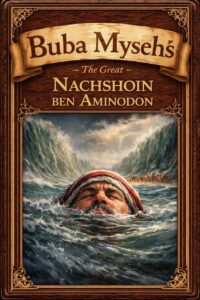
It’s taka a nice story but what about that water reaching to his neck? Where did that come from if not mentioned in the heylige Toirah? Why don’t we see this? And the answer is we don’t see it because it’s not there! And that detail — water up to his neck — is exactly where the story quietly evolves from early Aggadah into later embellished lore.
Did Nachshoin ever utter words about the waters having reached his neck? What is the exact quote attributed to him and by whom? The emesdike answer is this: No. Nachshoin is never quoted as saying, “The waters have reached my neck.” In fact, there is no line of dialogue attributed to him anywhere in Chazal and not in the heylige Gemora. That sentence exists — but not as his speech, Let’s be more precise. Where does the famous line “Waters Reached His Neck” come from? That imagery appears later, most notably in Midrash Tehillim (Shocher Tov), commenting on Tehillim 114 (Shiras HaYam). There, the Midrash applies the verse,
הוֹשִׁיעֵנִי אֱלֹקִים כִּי בָאוּ מַיִם עַד־נָפֶש – “Save me, O God, for the waters have reached my soul” (Tehillim 69:2). And applies it to Nachshoin as a description of his situation. The Key point is this: This is not Nachshoin speaking; It is the medrish speaking about him, and it is using Tehillim metaphorically. So happens that the exact language (as close as I could find) differs in various medrashic formulations. Another version – a popular one- has him saying:
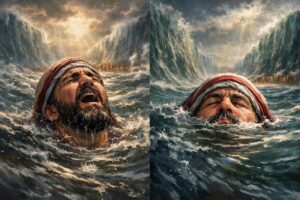
עד שהגיעו המים עד נפשו – until the waters reached his nefesh. So happens that NEFESH is not the neck. It means life, soul, being, danger point. And if that’s the case, who turned “נפש” into “neck / nostrils?” That step happens later, in homiletic literature, mussar works, sermons, and children’s retellings with each stage sharpening the image. In the Heyilge Gemora we read (see below) of waves tossing. In the medrish, waters reaching his “nefesh.” In drasha materials, it’s his neck, and in children’s books, the waters reached his nostrils. He was at his last breath, in danger of imminent drowning. The bottom line: That’s pedagogy, not transmission.
Well blow me down with a feather, and more on that lore below. Ober, if Nachshoin was taka essential to the event, his absence from the heylige Toirah text is conspicuous, and that already tells us something, but what? Shoin, let’s tackle this methodically and here are the facts on the ground: Nachshoin was a real person. He is in fact a real biblical figure but not quite yet. Givaldig and great news! He appears explicitly in Bamidbar 1:7 as the Nosi of Shevet Yehudah. He is the first to bring korbonis at the Chanukas HaMizbe’ach. We also find him listed in Rus 4:20 as the Ancestor of Dovid Hamelech- king David). Let’s check it out: וְעַמִּינָדָב הוֹלִיד אֶת־נַחְשׁוֹן, וְנַחְשׁוֹן הוֹלִיד אֶת־שַׂלְמָה.
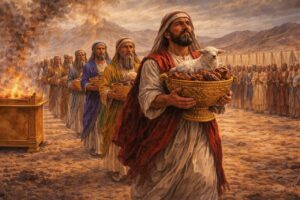
In English: Amminadov begot Nachshoin, and Nachshoin begot Salmah. That’s it — no drama, no sea, no courage narrative, and no heroic act. Just genealogy. The bottom line: Nachshoin ben Aminodov was a historical person, a tribal leader, and it’s more than clear that Chazal clearly valued him. That said, none of this connects him explicitly to the sea. Oib azoy (if that’s the case) and seemingly it is, what about the iconic narrative where the sea did not split until Nachshoin jumped in? Where do find this? Is this made up? By whom? This story with slight variations can be found in the medrish -where else- Mechilta d’Rebbe Yishmoel (Beshalach), in the heylige Gemora (Sotah 37a), and as mentioned just above- in Medrish Tehillim. Let’s check out the heylige Gemora which says this (faithful but readable translation): Rabbi Yehudah said: When Israel stood at the Sea, the tribes were contending with one another. One said, “I will not go down first into the sea,” and another said, “I will not go down first.” The tribe of Yehudah sprang forward and went down first into the sea, as it is said: “Judah became His sanctuary, Israel His dominion.” (Tehillim 114:2). Therefore, Yehudah merited kingship in Israel. Then the heylige Gemora adds this contradictory opinion: Rabbi Meir said: That is not what happened. Rather, this one said, “I will go down first,” and that one said, “I will go down first.” While they were arguing, Nachshoin ben Aminodov leapt into the sea, and waves rose against him.

At that moment Moishe stood in prayer. The Holy One, Blessed be He, said to him: “My beloved ones are drowning in the sea, and you stand and pray before Me?” Immediately, the sea split. Let’s read the actual words of the Gemora:
דרש רבי יהודה:
בשעה שעמדו ישראל על הים, היו שבטים מנצחים זה עם זה.
זה אומר: אני יורד תחילה לים,
וזה אומר: אני יורד תחילה לים.
קפץ שבטו של יהודה וירד תחילה לים,
שנאמר:
היתה יהודה לקדשו, ישראל ממשלותיו.
לפיכך זכה יהודה למלכות בישראל.
רבי מאיר אומר:
לא כך היה המעשה.
אלא זה אומר: אני יורד תחילה,
וזה אומר: אני יורד תחילה.
קפץ נחשון בן עמינדב וירד לים,
והיו גלי הים מטלטלין אותו.
באותה שעה היה משה מאריך בתפילה.
אמר לו הקב”ה:
ידידיי טובעים בים,
ואתה עומד ומאריך בתפילה לפני?
מיד — נבקע הים.
Two things are rather clear once we have read this: 1- The Gemora itself presents competing realities; Rabbi Yehudah and Rabbi Meir explicitly disagree. That alone disqualifies this from being historical reporting; one is zicher mistaken. 2- Nachshoin appears only in one version which tells us exactly how Chazal want us to read it: as a model, not a memo. Some versions don’t name Nachshoin at all. Others speak of a member of Sheyvet Yehudah, and Nachshoin’s name is sometimes supplied later. The bottom line: This weakens the claim that this is a strict historical tradition.
What the heylige Gemora does say is this: קפץ נחשון בן עמינדב וירד לים – “Nachshoin ben Aminodov jumped and went down into the sea,” and והיו גלי הים מטלטלין אותו – “The waves of the sea were tossing him about.” That’s it. No water to his neck, nose, mouth, last breath, or a near-drowning episode. Oib azoy (if that is the case and seemingly it is) where does “water up to his neck” come from? That vivid detail appears later, primarily in the medrish on Tehillim (114), later homiletic expansions, sermonic traditions, mussar literature, and children’s books (where it becomes absolute fact). There, the language escalates to “until the water reached his neck / nostrils.” Again, this is not Gemora, it is midrashic intensification.
Ober, why davka was Nachshoin selected to be the mythical hero? Why someone from Sheyvet Yehuda? Was this but a random choice by our brilliant sages? Did they stam azoy decide to pull Nachshoin’s name out of a hat? Did they? Ober, let’s give our sages more credit than that; they were mamish very bright and if they decided to place him in the story, mistama they had good rationale. Let’s see what it was. He had to be connected somewhere, close enough where the narrative would fit into the real scene. Was it because the people from the tribe of Yehudah -beginning of course with Yehudah himself took bold actions? Could be! Yehudah represented initiative, leadership, and forward motion without guarantees. Was it because Nachshoin later stepped forward first with korbonis? Could also be! If that’s the case, our Sages, when they created this Nachshoin jumping in the water story were doing something subtle: They were projecting Yehudah’s future role backward onto the moment of national birth. Not history — teleology. Tele-what? Shoin, it’s taka emes that the Ois did not learn this word in the various yeshivas he attended; this word was added to his lexicon only in recent years. In any event teleology means explaining something not by where it came from, but by where it is going. History explains the past, teleology explains meaning by future purpose. Aggadata and medrish are very comfortable doing the second. Nice word but how does it pertain to Nachshoin? When Chazal said Nachshoin jumped first, they were not answering who stepped into the water first, they were answering these questions: What kind of people must Israel become? Where must kingship come from? What does leadership look like at the moment of national birth? The bottom line: Teleology is not fabrication, it is selection. Chazal didn’t necessarily invent courage; they located it where it was needed. Nachshon did not jump because he was there; he was placed there by the Gemora and the medrish because someone like him had to exist. That is teleology.

And that said, the question on the Ois’s mind this week is this: Why did this Nachshoin’s story become Canonical Jewish consciousness? Why is that everyone who went to yeshiva knows punkt this story of Nachshoin’s heroism? Efsher we can kler azoy: Because it answers a terrifying question the heylige Toirah leaves open: If the RBSO promised redemption, why did the sea need human action at all? Nachshoin resolves the anxiety: Redemption still requires courage. Faith must move before salvation does and even if that’s not history, it is Jewish psychology. The bottom line: one must -if one wants a chance at winning the lottery, one should likely purchase at least one ticket! What really took place? Ver veyst, because the heylige Gemora -as mentioned above- provides two contradictory versions with different moral emphases and different character dynamics.
Is the Nachshoin story emes or not? The Maharal throws the red flag and here’s why: In his Sefer (Gevuros Hashem) he lays down this principle: When Chazal describe events that contradict the plain text or physical reality, they are teaching ideas in narrative clothing, not reporting journalism. Nachshoin fits this category perfectly. Why is that? Because of the heylige Toirah’s silence, the elaboration by the medrish, and his moral centrality. That combination is a classic Maharal signal: “Stop reading literally.” The emesdike bottom line is this: Nachshoin appears in Aggadah, inside a sugya that openly argues about what happened, using vivid poetry as proof, in a passage whose goal is kingship, courage, and faith —not reconstruction of events. And that raboyseyee is lore, not fable. And zicher not history. Clear? Not? Let us try again:
What’s the difference we asked between lore and fable? It’s azoy: Lore grows inside a real people’s history and is anchored to real names, real places, real time. It may include events that are not strictly historical. It Is not however invented for entertainment. Why was the neck detail added? Early aggadah says: Courage; later medrish says Total self-abnegation. Each generation sharpened the image to answer its own anxiety: How much risk does faith demand? Where is the breaking point? How far must trust go? So the story deepens; not historically, but emotionally. This is a classic aggadic pattern; the story grows because the idea grows. That’s how lore behaves. The Gemora says Nachshoin went into the sea. Later medrish says the water reached his neck. Children’s books say he almost drowned. Which tells you the story is not being preserved —it is being taught. That’s lore in motion. On the other hand, fable is openly fictional, and not tied to real history. The characters are interchangeable and it exists to teach a general moral. Fable answers: “What lesson can anyone learn?”

Let’s review with a short and sweet distinction: A fable teaches a lesson. Lore preserves a people’s memory of itself. Where does the Nachshoin story fall? Nachshoin was a real person → lore. Jumping into the sea may not have happened → and it’s still lore because the story expresses what Israel believes courage should have looked like at its birth. Calling it a fable would mean this story is optional. The bottom line: Fables are told to children while lore is told to descendants.
Now it’s taka emes that by telling this story, our sages risked confusing moshol with myseh, turning theology into biography, and letting folk faith override textual honesty. They did it anyway. Why? Because Judaism is not afraid of saying: A good myseh (story) can be truer than an event. The bottom line: Nachshoin ben Aminodov was a real man, but Nachshoin at the sea may not have been. Wow! Judaism preserved him anyway because faith sometimes needs a face, even when history does not. So happens that the Yiddin who crossed the split sea only had momentary faith because three days later, as the heylige Toirah describes, they were back to their ways complaining to Moishe about food and other things. Shoin, let’s give them a pass; having been broken for so many years, it would take more than one miracle to get their faith into the automatic mode. They needed to seem them daily.
As to Nachshoin, he never said, “the waters have reached my neck,” or anything like it. Even Chazal never put those words in his mouth; they put the words about him and let later generations supply the drama. That is how Aggadah works. The drama intensifies over time and the lesson outpaces the event. That is lore, not fable — and, as just mentioned above, not history either.
Oh well, we still love and admire him.
A gittin Shabbis –
The Heylige Oisvorfer Ruv
Yitz Grossman
Source URL: https://oisvorfer.com/beshalach-2026-lore-not-fable-teleology-at-the-sea/