Behar – Bichukoisai 2026: Who Wrote the Zohar?
by devadmin | May 7, 2026 5:49 pm
Raboyseyee and Ladies,
Who Wrote the Zohar?
Is that even a question? Seemingly it is, and we shall explore this below, but first a few other not so random thoughts.
Shoin, this past Monday morning, a full day before Lag B’oimer, a rather observant gentleman called and was wondering if he could get a haircut that day. With the counting of 33rd day of the Omer still hours away, I was wondering why he couldn’t just hold out one more day. He explained that he was attending a wedding later that night and was feeling quite grizzly. And the question is azoy: may one shave a few hours off the sefira calendar and get cleaned up for a wedding on Erev Lag B’oimer? What’s so special Lag B’oimer? Why do we party in the middle of mourning the death of Rebbe Akiva’ students? Logic would dictate farkert (opposite): who would be in the mood for celebrations after so many thousands perished beginning sometime over Pesach until Shovuis interrupted by Lag B’oimer. What’s pshat? And yet, Lag B’oimer is kimat a national holiday for the Yiddin with myriad festivities? In the yeshiva world, it’s perhaps the biggest day of the year. Who made up this holiday and why? We’ll circle back to that soon, ober, before we begin, let me (not so humbly) say this: I get comments weekly, some from far flung places, mamish around the world. One never knows the reach of the Ois’s weekly parsha posts. That said, last week I got one from 300’ ft away from my house here in Lawrence N.Y.
Of late – these past three weeks- I have been featuring some back and forth with my son-in-law over halachic issues. I had -lovingly of course- taken him to task and ribbed him mercilessly over his premature haircut the day before Rosh Chodesh (after getting permission -via text from a friend’s rabbi). In case you missed that post, see it here: https://oisvorfer.com/achrei-mois-kedoishim-2026-when-thursday-became-friday/

Most took the article as intended -tongue in cheek- though one reader was pissed off that Yaakov was bending laws. Case closed? Not! Because at a block kiddish hosted by a neighbor, another neighbor (let’s call him Ed Klar) handed me a sheet of paper and introduced it by telling me that he read the Ois’s post (that was a surprise) and then explained that he came across something that might have an impact on what I wrote.
The one pager came from a Kollel in Yerusholayim. Ed seemingly subscribes and gets a weekly summary on questions posed to the Kollel rabbis. One of the topics de jour: Haircuts on Erev Shabbos Kodesh When it Falls on Rosh Chodesh Iyar. Well, blow me down! I read it (twice) and it mamish discusses the case of a person who follows Rebbe Yehudah HaChosid not take a haircut on Rosh Chodesh. And it quotes a source suggesting that there might be a leniency for such a person to get a haircut on Thursday afternoon (exactly what my SIL did). I quote verbatim “Additionally, in Kovetz MiBeis Levi (p. 341), the view of the author of Shevet Halevi zt”l is brought: If Rosh Chodesh Iyar falls on Friday, those who follow Rabii Yehudah Hachosid’s directive may take a haircut earlier -on Thursday after midday. He cited Kaf HaChaim (siman 393:47) who, Beshem Anshei Keneses Hagdolo and other achronim bring leniencies in this matter. Therefore, some halachic authorities permit beginning haircuts even on Thursday night after sunset, and who is lenient in this has authorities to rely on.” Well blow me down!
The bottom line: Though the source might not be well known, hec, it wasn’t known to a few local rabbis, it is a source. And if it’s quoted, it appears that Yaakov was not the first to get cleaned up on Thursday before Rosh Chodesh. More: It’s a legitimate source; one can rely on it. Accordingly, in the matter of the Thursday haircut, Yaakov was not bending and twisting; he was following -albeit not knowingly- some accepted opinion. In the end, Yaakov is exonerated.
As to the caller’s haircut on Monday -mamish still during the days when kimat all observe some sefira restrictions- believe it or not, after consulting important sources, I discovered that although the law -as taught in yeshiva- is that we cannot take haircuts until Lag B’oimer (and some wait until one day later), guess what? Every rabbi has an opinion and if that rabbi was lucky enough to have been known or quoted, he has followers. The Be’er Heitev gives the heter (permission). Accordingly, there is a legitimate source for the caller to have taken a haircut on Monday afternoon before Lag B’oimer. The bottom line: when it comes to haircuts, there is a good source for leniency; it’s yours for the taking. Your own minhag (custom) or fear of what others might think, dictates whether or not you use it to get cleaned up for the wedding.
But raboyseyee, that is not our topic of the week. Let’s go veyter and welcome in the last two parshas of Sefer Vayikra. Let’s get ready for Parshas Behar and Bichukoisai and let me begin here. Of late the heylige Ois has been fielding complaints from a few readers. Why – they are wondering- has the Ois gone so mainstream? Where are the Gamora quotes or medroshim containing sexual content? Where are the innuendos and the double entendre? Am I ok? And taka they were correct. That said, in general, if the medrish does not bring or reference something of a sexual nature on the topic being discussed, the Ois will not force the action.
And with that, believe it or not, and to my great surprise, Parshas Behar, most famous for its introduction and lively discussion of Shmita and Yoivel, where the land rests, remains fallow -no action mamish- and other monetary laws are taught, does have an epes surprising connection and let’s get right into it. What if I told you that Shmita may somehow be connected to circumcision and sexual desire? It does? Mamish? How can a bris which entails a shtikel cutting, snipping and pruning, be in any way related to Shmita where none of those take place? Shoin, leave it to the heylige Zoihar, he the great and holy kabbalist with no end to his imagination, to connect the dots. Of course, it’s only appropriate to bring the heylige Zoihar into our discussion because according to some, it was no lesser a giant than Rebbe Shimon Bar Yochai who seemingly unveiled the heylige Zoihar just before he passed away on Lag B’oimer mamish. Did he? Is this even a controversial question?
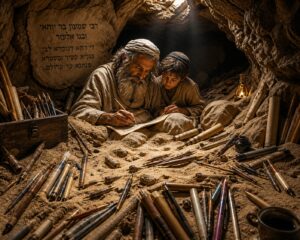
According to some but zicher not all, Rebbe Shimon or RASHBI as he is known to most, while hiding from the Romans in a cave for the 12 years before emerging and then going back in for another year, seemingly authored the Zohar. Well blow me down! Pants he didn’t have, but he seemingly had access to writing implements?! In one version, he and his son would daily remove whatever clothing they escaped with, bury themselves in sand and learn Torah all day, donning their clothing for prayers only. Givaldig! Food he didn’t have either and according to legend, he was sustained by a carob tree, and spring but he seemingly has unlimited lead in his pencil.
But is all that mamish emes? Let’s unpack what we know and then let us separate fact from either fiction, fable, folklore, or accepted custom. Is it emes that rebbe Shimon bar Yochai wrote the Zohar while in a cave hiding for 12 years? And that he introduced it just before his death on Lag B’oimer? Humm…And here raboyseyee are the facts, like them or not! The ever-popular story mixes together several traditions; some from our Sages of the heylige Gemora, some are much later. Interesting. Let’s separate them carefully.
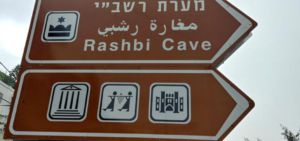
Did Rebbe Shimon bar Yochai hide in a cave for 12 years? Yes, that part is straight from the heylige Gemora (Shabbis 33b); we never argue with the heylige Gemora. As told, he criticized the Romans, a decree was issued against him, he fled with his son Rebbe Elazar ben Shimon, they hid in a cave for 12 years (then an additional year), and miracles sustained them (carob tree, spring).
Nice, but did he write the Zohar in the cave? Here things shift. The traditional (Kabbalistic) view is that the heylige Zohar was authored by Rabbi Shimon bar Yochai, possibly revealed during that hidden period, and then transmitted to select students. Or, possibly revealed just before he passed away on Lag B’oimer. That said, the academic/historical view is this: the Zohar appears in 13th century Spain (the 1200’s) where it’s associated with a Moses de León, and was likely composed or compiled then. Moses who? And if that’s emes, it wasn’t written or composed by Rebbe Shimon. OMG! What’s the emes? Who was the real author? That of course depends on whom you ask. Within Orthodoxy, many -not all- fully accept RASHBI as its author. Some say it was written later but based on his teachings. And some are mamish quiet about authorship but accept its קדושה . in other words: they are not convinced. Nice. The bottom line: his authorship is not universally accepted even among orthodox thinkers and no one can prove or disprove.
Limya nafka mina (what’s the difference if he wrote it or not)? If he taka wrote it, he could have, and might have revealed it -as legend goes- just before his death on Lag B’oimer and therefore this day became a holiday. The heylige Zoihar is no joke. On the other hand, this part of the story is clearly not from the heylige Gemora. This part came much later from Kabbalistic traditions where his final day is described as a great revelation of secrets. Somehow, this day became associated with Lag B’oimer, and this day was called his hilula (celebratory yahrzeit). This idea is found in later Zoharic/kabbalistic literature (like “Idra Zuta”). Let’s repeat: The heylige Gemora never connects him to Lag B’oimer. And his death on Lag B’Oimer + revelation is a later tradition. Well, blow me down! Might all this be but a scam? What is mamish emes and solid vs. later layer? Ver veyst?
In plain English, the story people tell today is really a fusion of Gemora narrative (cave), Kabbalistic authorship (Zohar), mystical tradition (final revelation), and the minhag of Lag B’oimer celebration. RASHBI in a cave, that’s Gemora. RASHBI writing the Zohar there, that’s tradition, and RASHBI unveiling it on Lag B’oimer, well, that’s later mysticism layered on top.
And if you think the Ois is out of bounds with these facts, and that I’m a non-believer -or worse, that’s not emes either. I’m just confused. That said, many respected rabbis eventually bought in and accepted later versions as the holy grail truth: he wrote the Zohar while in the cave and revealed in on Lag B’oimer shortly before his death. Case closed? Not! Because many is not all, and some accept the Zohar as holy and rooted in RASHBI, but don’t insist it was written exactly as-is in the cave.
Rabbi Yaakov Emden, another torah giant -and others- did not buy in. They believe that while RASHBI taught the ideas, later תלמידים or transmitters recorded them, and that later redaction/editing occurred. In fact, some major Rishonim were uneasy with the Zohar or didn’t treat it as binding. Ober, if he didn’t write it, who did?
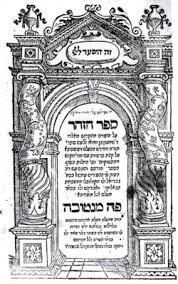
Let’s circle back and meet Moses De Leon and his role in the Zohar mystery. Who was he and why was he forgotten? Was he perhaps the real author of the Zohar? The plot thickens! Here’s what we know with certainty: Moses, lived in 13th-century Spain (c. 1240–1305), was a kabbalist, writer, and traveling teacher, lived around Ávila / Guadalajara, and wrote several mystical works before the Zohar appeared. He was not obscure in his time; he was part of a growing Kabbalistic movement in Spain. Why is he so central? Because he is the first known person to circulate the Zohar (late 1200s). Before him there were no clear references, no manuscripts and no citations. After him, the Zohar spread rapidly and became widely studied. And for those reasons, he is a prime candidate in the mystery of who wrote the Zohar. After he died, a wealthy man allegedly offered money to see the original ancient manuscript of the Zohar. His widow reportedly responded: There is no ancient manuscript; my husband wrote it himself. But… is that story reliable? Ver veyst? It’s second-hand testimony, not recorded by Moses de León himself (of course not, he was dead), and could reflect bias, misunderstanding, or truth. So: It’s powerful evidence—but not airtight proof.
On the other hand, the case for Moses de León as the real author is strong. Many (especially historians, and some rabbinic critics like Yaakov Emden) point to these factoids: The Zohar shows up fully formed in his hands. The Aramaic style resembles medieval Hebrew/Aramaic, not classical Tannaitic Aramaic. And, concepts and expressions that seem post-Talmudic. Finally, his other works show similar themes and style. Who wrote it? He (possibly with others), composed it in 13th-century Spain.
On the other hand, those who defend RASHBI’s authorship argue that the Zohar existed but was kept secret for centuries and that Moses de León only revealed or copied it. Their argument is that a serious mekubal wouldn’t invent a sefer and attribute it falsely to Rabbi Shimon bar Yochai. Sidebar: According to some, Moses De Leon wrote it but tried claiming that it was written 1100 years earlier by the RASHBI. And major figures like the Arizal and others embraced it as authentic. Chap my confusion? It’s legit! Then again, not every mekubal is legit, especially these days.
What became of Moses de León? Was he forgotten? Not! Because we’re still writing and talking about him in 2026. That said, the heylige Zoihar overshadowed him completely. The bottom line: Tradition focuses on RASHBI as the source. Moses de León became a messenger at best, a suspect at worst. On the other hand, the elephant in the room is this: The Zohar first becomes widely known in 13th-century Spain and if it was written in the 2nd century, why does it only surface 1,100 years later? Lost in the sand? Gotcha? Not! Because those in the RASHBI camp argue that it was hidden, transmitted secretly, and only revealed when the world was ready. Zohar concepts are not for everyone and conditions needed to be right for the Zohar to be accepted. It took some 1100 years for the timing to line up. Great story; go prove otherwise.
The bottom line: No one can prove that RASHBI wrote the Zohar. That said, mainstream orthodox communities today functionally assume that The Zohar is holy and authoritative, that it’s tied to RASHBI, even if transmission details are murky. No rabbi will ever admit that “It might just be a medieval invention.” The machloikes is whether RASHBI held the pen, or whether he lit the fire and others wrote the book.
Logic dictates that real authorship came from Moses de Leon but that storyline would have a deleterious effect on Lag B’oimer and the multimillion-dollar enterprise built around Lag B’oimer festivities. Toirah inspired entrepreneurs have long ago become marketing experts, and at this stage of the game, it’s questionable if not doubtful, that even the Moshiach himself would be able to change people’s minds even if the facts became indisputable. The bottom line: Marketing always beats facts. Many religions have gained traction that way.
Shoin, where were we? Yes, we were talking about how the Zohar connects Shmita to bris mila and sexual desire. Let’s complete the thought.
Says the heylige Zoihar -no matter who wrote it- on the beginning of this week’s parsha, azoy: Rebbe Elozor said that every Yid that has undergone circumcision (that would taka be every Jewish male), has within him the rest of Shmita, whatever that means. Taka, what does that mean? Ver Veyst, ober that’s what he says. Let’s avada recall that this is kabolo (mysticism) and who says you need to understand what the heylige Zoihar was thinking and said over in the name of Rebbe Elozor? One day, after 12-13 years in a cave, buried in sand without clothing, when you are on his level, you will chap. Shoin, case closed.
The bottom line: someplace inside of you -don’t ask where- those who are circumcised, have the rest associated with Shmita inside of yourselves. Ober what does that mean? Seemingly the Shmita belongs to those circumcised and this is referred to as ‘shabbis ha’oretz’ (the resting of the land). Is it clear now? Not! Let’s try again: just as shabbis entails total rest, so too Shmita refers to the resting of all land.
Ober what’s taka pshat that a person who has undergone a bris is considered to be at rest? Have any of you oisvorfs been resting? Or, are you out there daily trying to plow, sew, seed, and reap, if you chap? Says the Rambam (Moireh Nivuchim 3:49) azoy: one of the reasons the RBSO ordered that we undergo circumcision, was to weaken our physical desires, if you chap. Ok, that part did not work out as planned! Back to the Rambam: When one has weakened desires, he, by extension, has an increase in his emunah (faith and trust) in the RBSO who is mamish the only real true source of strength. Similarly, when the farmer allows his land to remain fallow during year seven (this is the mitzvah of Shmita observance), and by extension has nothing to harvest in year eight, one shows greater belief and reliance on the RBSO who is the master of all and provider of all sustenance.
The bottom line: Bris mila (circumcision) and Shmita are related. Veyter. Said the Maharal azoy: circumcision is deemed to be sustaining. And davka because of its intended side effects, Yoisef the viceroy of Mitzrayim, insisted during the famine, that all of Paroy’s subjects, undergo circumcision before he would sell them provisions. Was he hoping that with circumcision, their desires for physical pleasure would be greatly diminished, and as a result, the Mitzrim would find trust in the RBSO instead of the myriad idols they were worshipping? The circumcisions took place ober the Mitzrim continued to have desires. Of-course they did; so do we all. It’s how we are programmed. Another well intended but failed experiment. Desires are seemingly stronger than the intended consequences of the bris.
The heylige Zoihar wasn’t stam throwing around poetic language for no reason. He’s hinting to something, ober you have to chap the code. The heylige Toirah comes along in Parshas Behar and tells the farmer: Stop! It’s year seven: Hands off. No plowing, no planting, no touching the land. Leave it alone. Let it rest. Mamish like that. And then along comes the Rambam and says—by the way, the whole idea of bris mila is to reduce a person’s physical drives. Hands off! To take the edge off. To cool things down. Ahh…so now we’re talking.

What’s going on here? The farmer wants to work the field; of course he does. That’s what he does all year. He sees open land and thinks: What can I plant? What can I grow? What can I produce? And the heylige Toirah says: Not everything is yours to act on. Not every urge gets a green light. Sometimes the avoidah is davka in the holding back. And that, raboyseyee, might be the quiet connection between Shmita and bris. One is on the land, the other on the body: but both are telling the same story: a Yid is not defined by what he can take, plant, or produce… but by what he knows when to leave alone.
How did these instructions work out? As mentioned above, you might say -maybe not very well. OK, not at all!
A gittin Shabbis-
The Heylige Oisvorfer Ruv
Yitz Grossman
Source URL: https://oisvorfer.com/behar-bichukoisai-2026-who-wrote-the-zohar/